
Request A Tool
Describe the calculation your workflow needs, the inputs you already have and the output you want to check. Include units and an example without confidential job details.
Request A ToolA steel designation and its material condition belong together when selecting cutting data. A chart entry for one heat-treated state should not be transferred silently to another. Use this page to organise the inputs before calculating machine values.
Check whether the job information states heat treatment, hardness or a particular supplied condition. Use those details to locate the appropriate tooling reference. If they are missing, resolve the material identification instead of treating a familiar grade number as proof of machinability.
Turning feed is commonly expressed per revolution. Milling tooth feed also requires the effective cutting-edge count. The same decimal value means a different linear feed when its unit changes. Keep the original unit visible beside each source value.
Suppose the selected input is 120 m/min at a 40 mm workpiece diameter. Calculated speed is about 955 RPM. A separately selected feed of 0.20 mm/rev corresponds to 191 mm/min at that RPM. Both source values are hypothetical for this calculation and must not be used as a steel recommendation.
An RPM value copied from a different workpiece diameter produces another surface speed. Recalculate when the machining diameter changes and compare with the applicable tool data. For a milling job, check the actual cutter diameter rather than the shank diameter.
Open The Feed & Speed Calculator | Browse Material References
Carbon steel, alloy steel and wear plate are useful descriptions only when they remain attached to the actual specification. SSAB’s machining guidance directs readers to cutting-data brochures for its own products and discusses hardness, tooling and machine stability. That is a reason to identify the steel first, rather than transfer a generic cutting-speed value across unrelated grades.
| Example Job Description | Missing Information To Resolve |
|---|---|
| A carbon-steel turned shaft | Drawing grade, supplied condition, relevant hardness and the actual insert reference. |
| An alloy-steel milled component | Material designation, heat treatment and the cutter supplier’s matching material category. |
| A specified wear-plate product | The exact product grade and producer machining instructions for that plate. |
Start with the product and tooling instructions instead of assuming the conditions of a previous mild-steel hole. SSAB’s machining questions and cutting-data pointers provide producer-specific context. Use the drilling workspace only after source cutting speed and feed per revolution are established.
The job descriptions above are illustrative. SSAB guidance applies to its stated products and conditions; it does not identify an unknown steel or replace the toolmaker’s application data.
Not when the tooling source also distinguishes heat treatment or hardness. Resolve those details from the job information before choosing the source entry.
It illustrates a conventional turning relationship. For milling, the feed calculation also uses effective cutting teeth and source feed per tooth.
Describe the calculation your workflow needs, the inputs you already have and the output you want to check. Include units and an example without confidential job details.
Request A ToolShare this page address, the entered values and the result you expected. Include the source of your comparison so the formula, units and explanation can be investigated.
Report An ErrorThe site brings calculation tools and machining references into one workspace. Use the editorial and site information to understand its purpose and limitations. Send corrections with a reproducible example through the error report form.
Continue with the calculation, setup or troubleshooting question closest to your task.
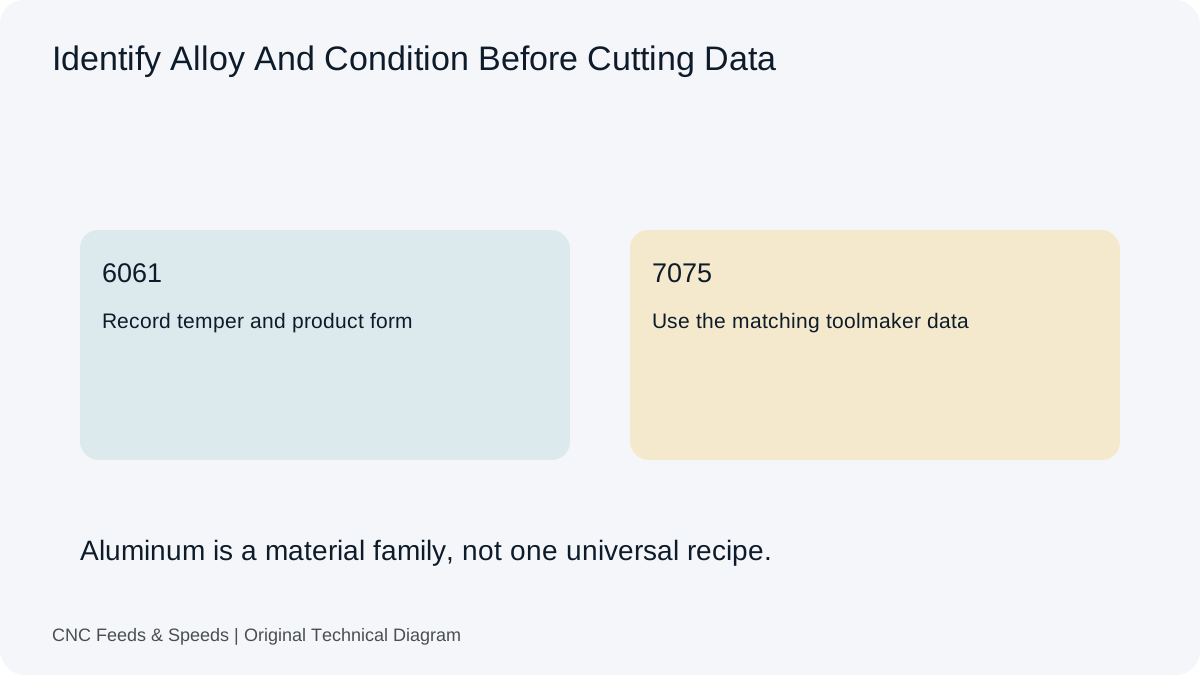
Build an aluminum milling starting point from toolmaker cutting speed and chip load, then verify engagement, chip evacuation and machine limits.
Read Article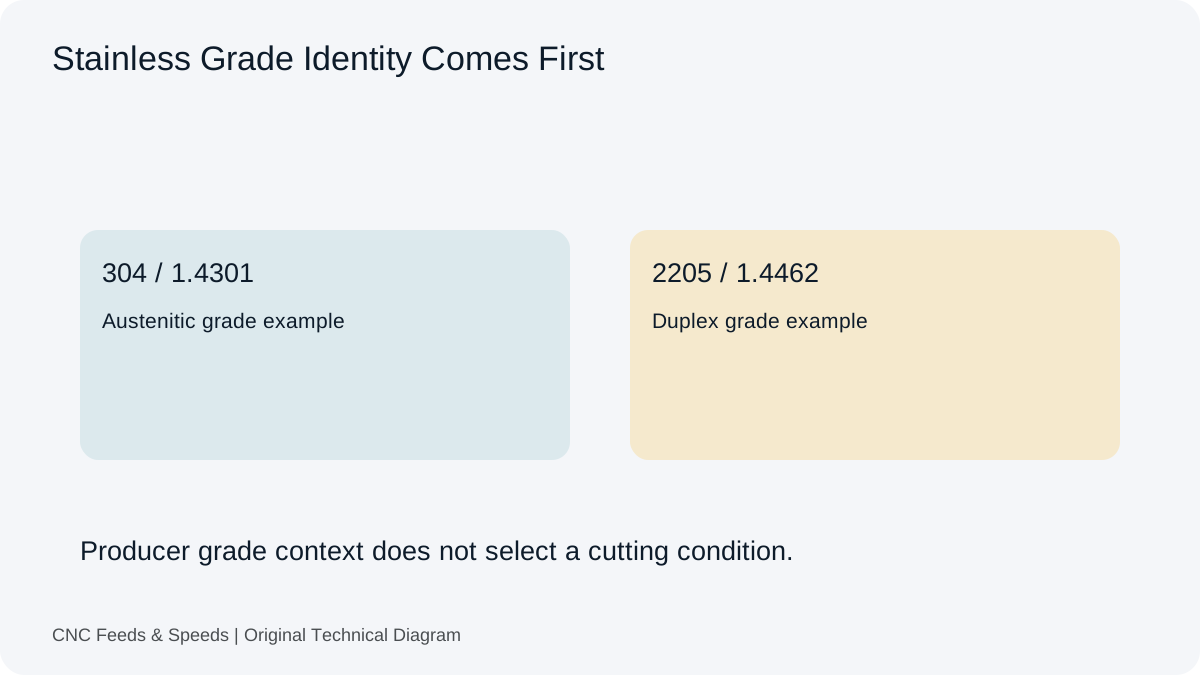
A calculation-first framework for stainless steel machining that emphasizes tool data, chip thickness, rigidity and heat control.
Read Article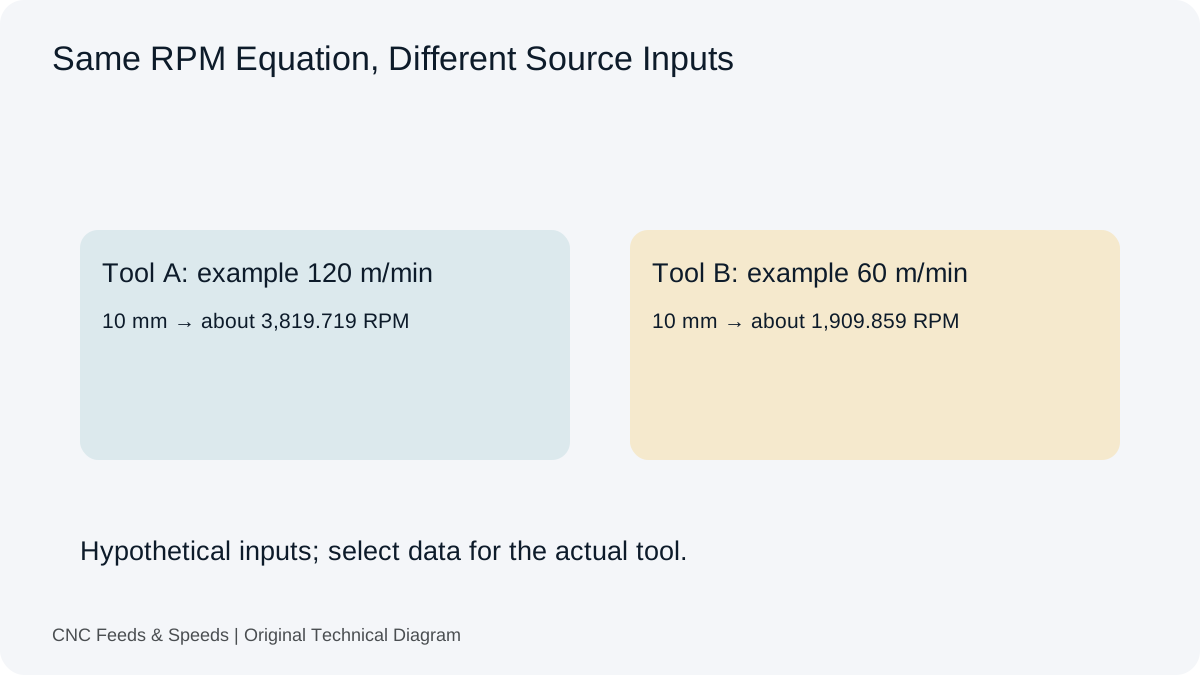
Compare carbide and HSS cutting-data considerations and learn how tool construction changes the starting cutting condition.
Read Article
A practical method for interpreting CNC cutting-data charts, matching units, and cross-checking chart values with transparent calculations.
Read Article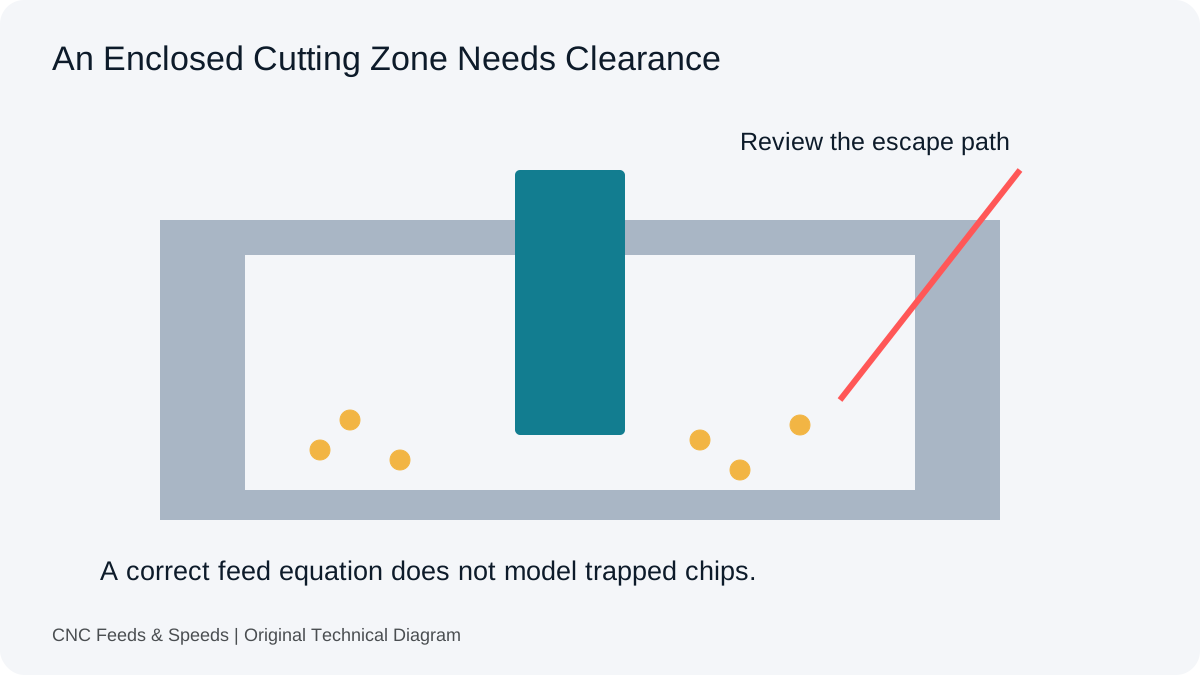
Distinguish arithmetic errors from an enclosed cutting zone. Review entry, tooling, material and chip clearance before another feed change.
Read Article
Inspect the difference between nominal tooth feed and actual edge loading. Record the assembly and measurement before changing assumptions.
Read Article
Understand why tool stick-out and system rigidity affect usable CNC cutting conditions, and how to troubleshoot chatter systematically.
Read Article
A practical guide to calculating CNC milling feed rate from spindle speed, flute count and chip load, with unit checks and verification steps.
Read Article
Understand feed per tooth, how chip load is calculated, and how flute count and spindle speed change milling feed.
Read Article
Learn what surface feet per minute means, how it relates to RPM and diameter, and when to use SFM versus metric cutting speed.
Read Article
Understand how spindle RPM and programmed feed interact, when feed should scale, and why machine limits change the calculation.
Read Article
Calculate and interpret material removal rate for CNC milling, including feed, radial engagement and axial depth.
Read Article