
Request A Tool
Describe the calculation your workflow needs, the inputs you already have and the output you want to check. Include units and an example without confidential job details.
Request A ToolReference formulas and unit relationships for RPM, cutting speed, feed, chip load, MRR and feed per revolution.
Use this page as a quick reference for the relationships behind the calculators. The tables are explanatory; the exact cutting-data value should still come from the actual tool and material source.
RPM = (1000 × Vc) ÷ (π × D)Vc in m/min; D in mmRPM = (12 × SFM) ÷ (π × D)SFM in ft/min; D in inF = RPM × Z × fzZ = flute countf/rev = F ÷ RPMKeep units consistentfz = F ÷ (RPM × Z)Feed per toothMRR ≈ F × ae × apRectangular approximationt = distance ÷ feedUse matching distance/feed unitsF = RPM × f/revCommon turning relationshipWrite the units beside every source value. Convert before applying the equation, not after the result has already been created.
A feed per tooth in mm/tooth belongs with a metric linear feed result. For example, 0.05 mm/tooth is about 0.001969 in/tooth; retaining the number 0.05 after changing the unit would describe a different tooth feed. Keep full intermediate precision and round the result after the calculation is checked.
For removal volume, 1,000 mm/min × 5 mm × 2 mm gives 10,000 mm³/min. Dividing by 1,000 gives 10 cm³/min. The MRR guide explains the steady-cut assumption, while the chart interpretation guide helps recover the source definitions before a number reaches the calculator.
Milling introduces effective teeth and engagement. Turning uses workpiece diameter and feed per revolution. Drilling connects drill diameter with penetration rate, while tapping follows thread lead. These references explain why a shared-looking feed number can represent different quantities.
Cutting speed is in metres per minute while diameter is in millimetres. The factor converts metres to millimetres before relating circumference to revolutions.
Divide by 1000, because a centimetre contains 10 millimetres in each of three dimensions. For a volume rate the same conversion changes mm³/min to cm³/min.
Describe the calculation your workflow needs, the inputs you already have and the output you want to check. Include units and an example without confidential job details.
Request A ToolShare this page address, the entered values and the result you expected. Include the source of your comparison so the formula, units and explanation can be investigated.
Report An ErrorThe site brings calculation tools and machining references into one workspace. Use the editorial and site information to understand its purpose and limitations. Send corrections with a reproducible example through the error report form.
Continue with the calculation, setup or troubleshooting question closest to your task.
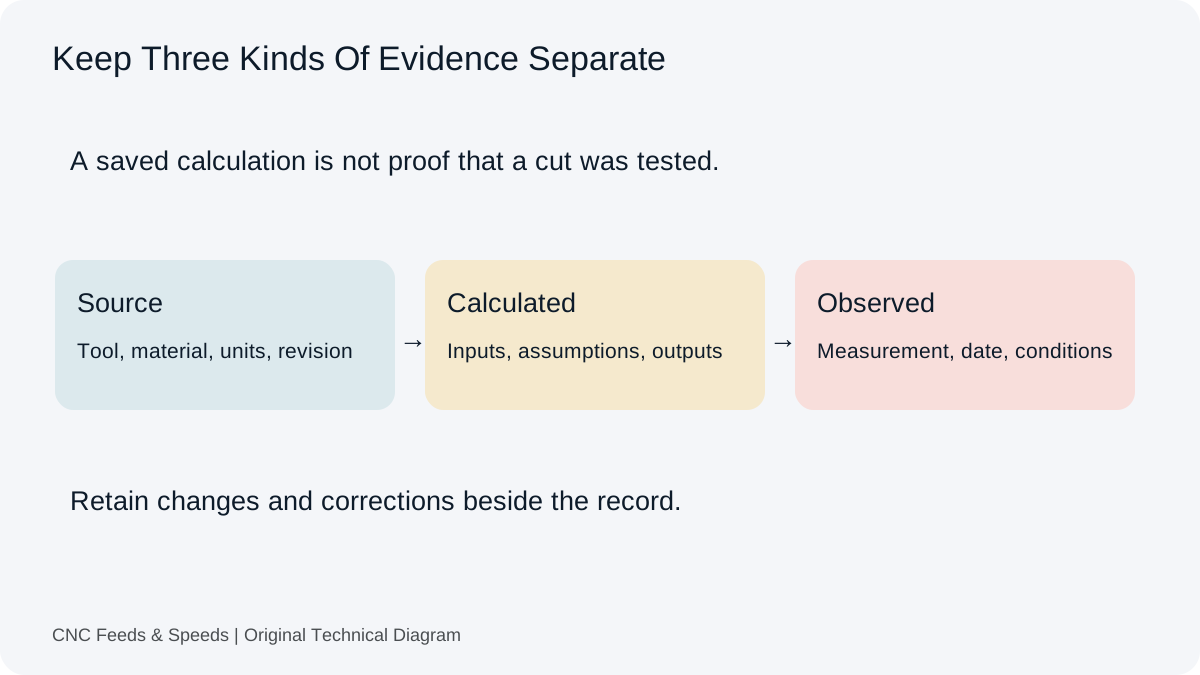
Preserve source data, calculated commands and observed results separately. Use local setup records with clear revisions, units and export limits.
Read Article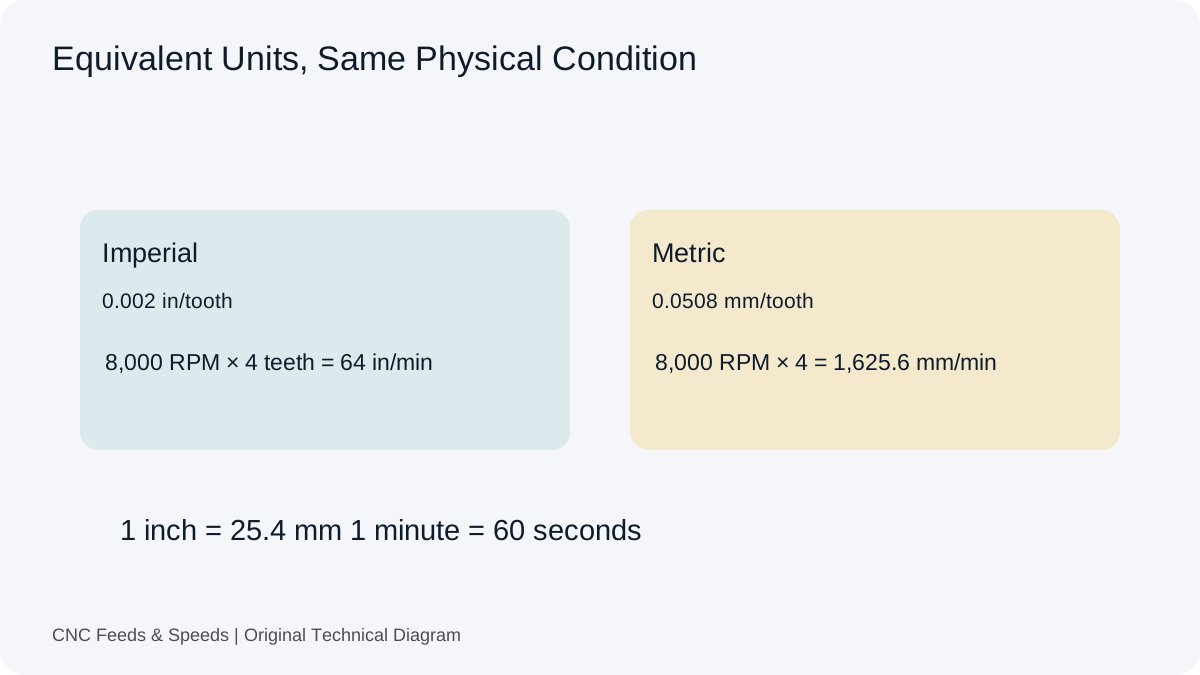
Check length, feed, surface speed, volume and pitch conversions. Follow equivalent metric and imperial examples before transferring a command.
Read Article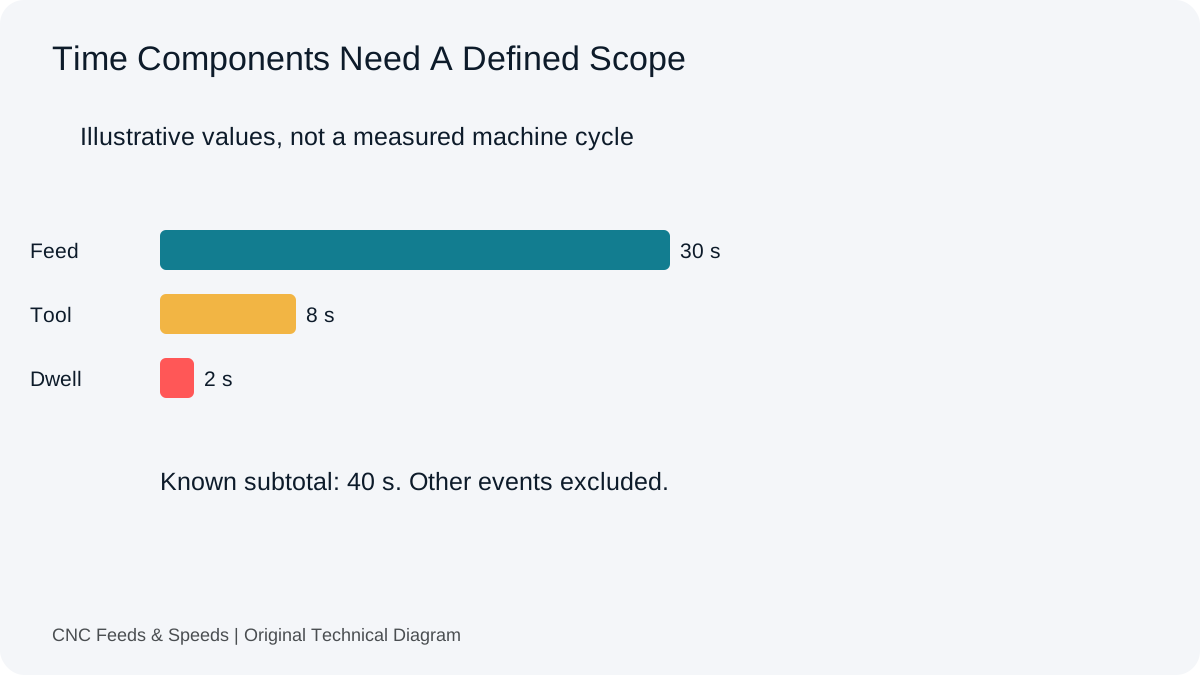
Define the scope behind each time figure. Separate feed travel, machine events, observations and production work before using an estimate.
Read Article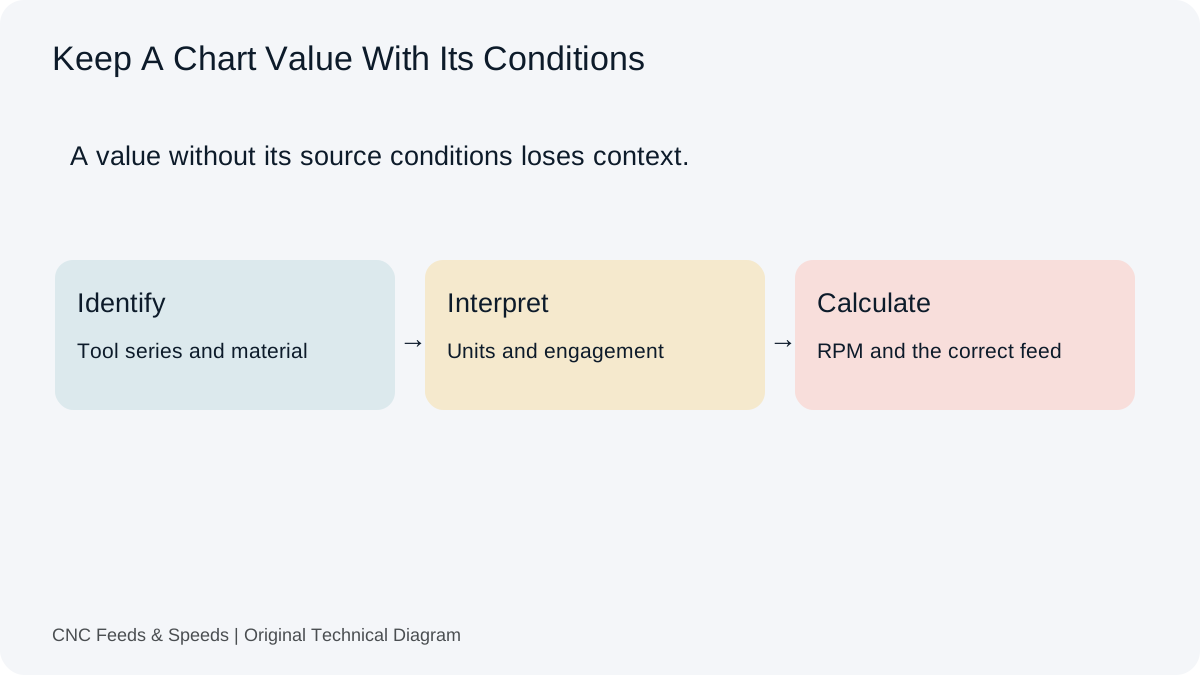
A practical method for interpreting CNC cutting-data charts, matching units, and cross-checking chart values with transparent calculations.
Read Article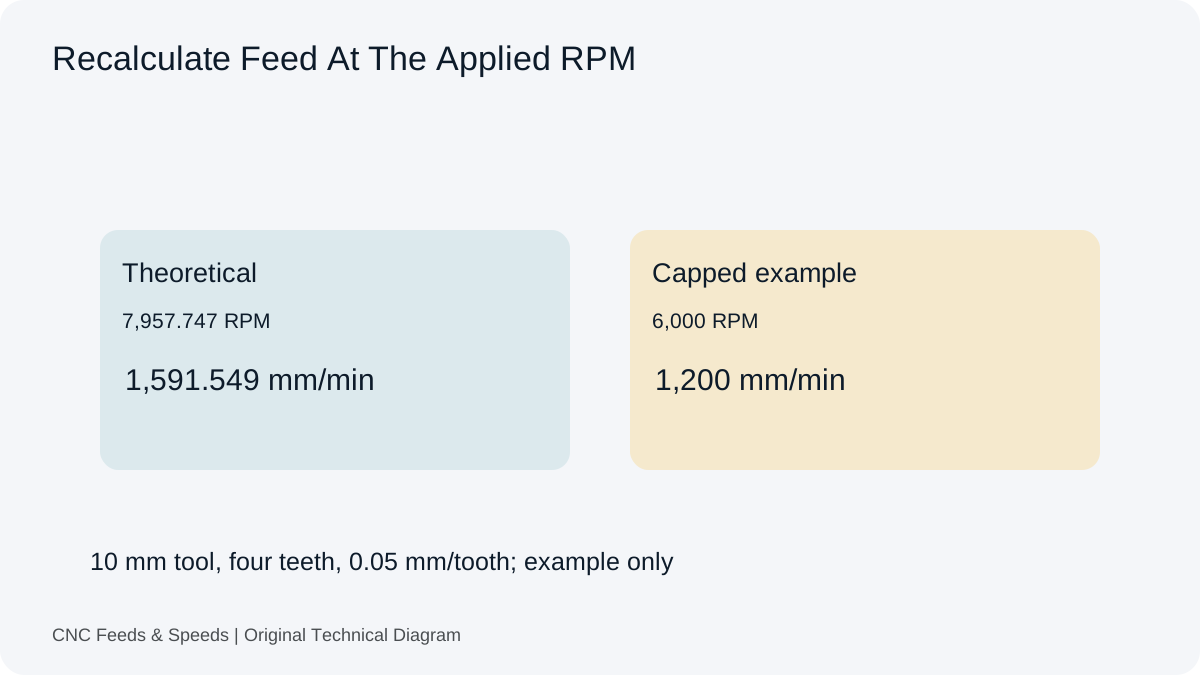
Understand how spindle RPM and programmed feed interact, when feed should scale, and why machine limits change the calculation.
Read Article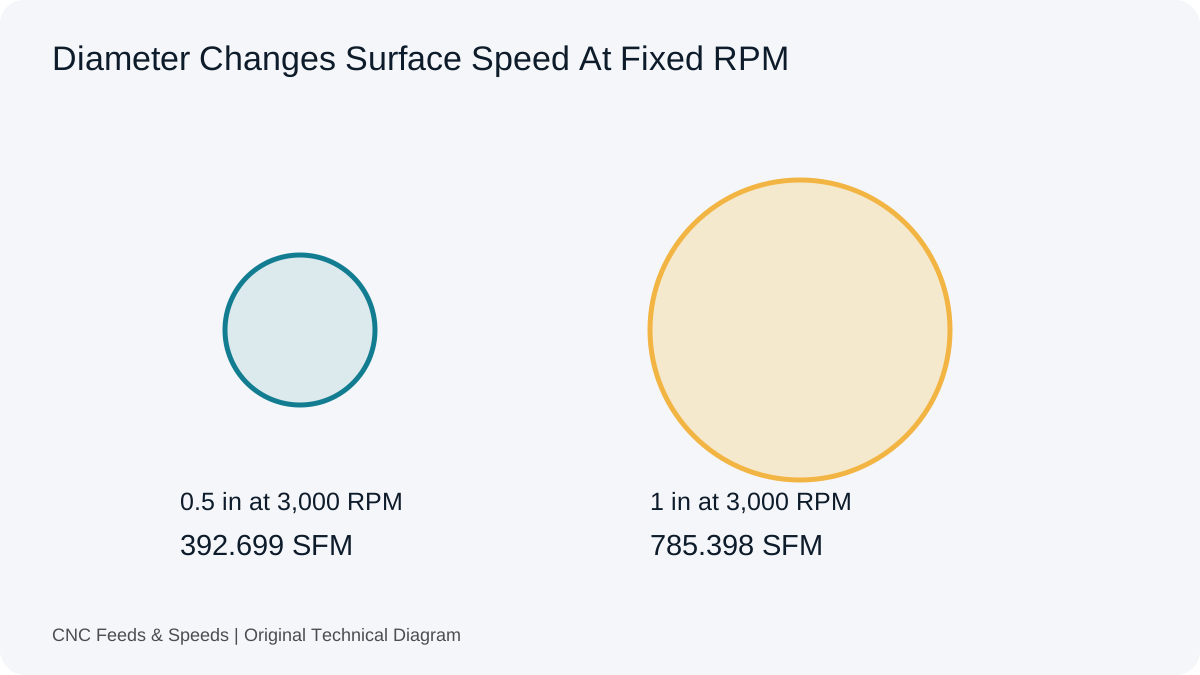
Learn what surface feet per minute means, how it relates to RPM and diameter, and when to use SFM versus metric cutting speed.
Read Article
Separate new cutting travel, re-entry, retracts and dwell. Build a transparent time estimate that respects the actual cycle and controller.
Read Article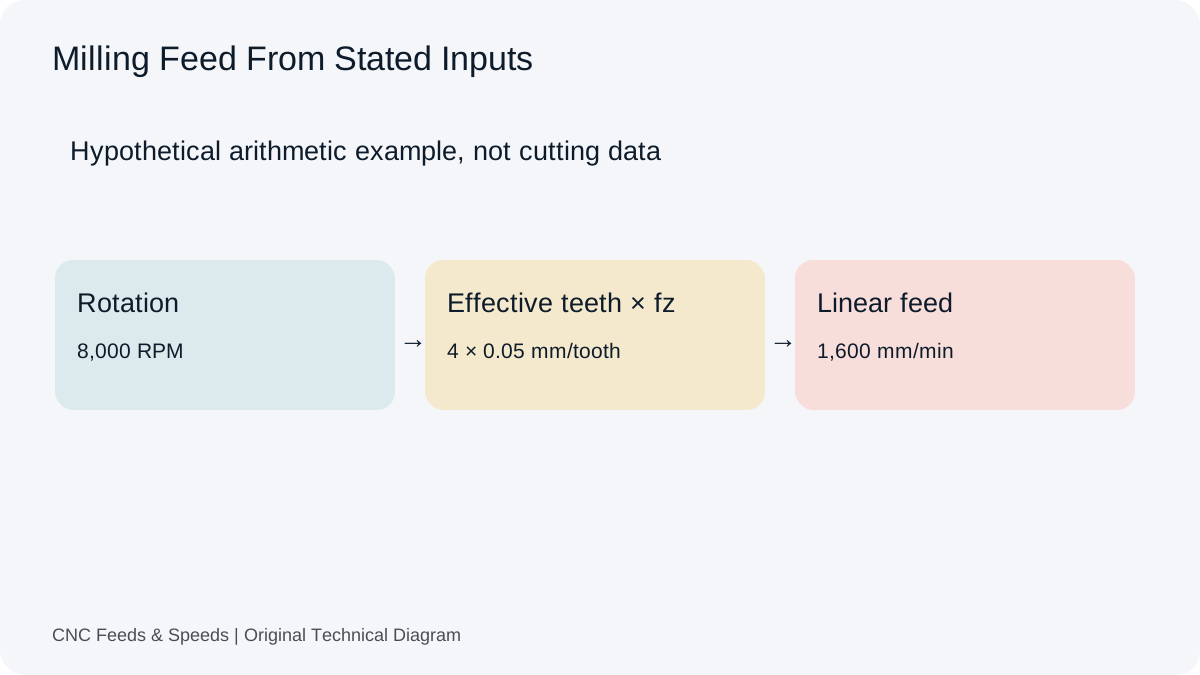
A practical guide to calculating CNC milling feed rate from spindle speed, flute count and chip load, with unit checks and verification steps.
Read Article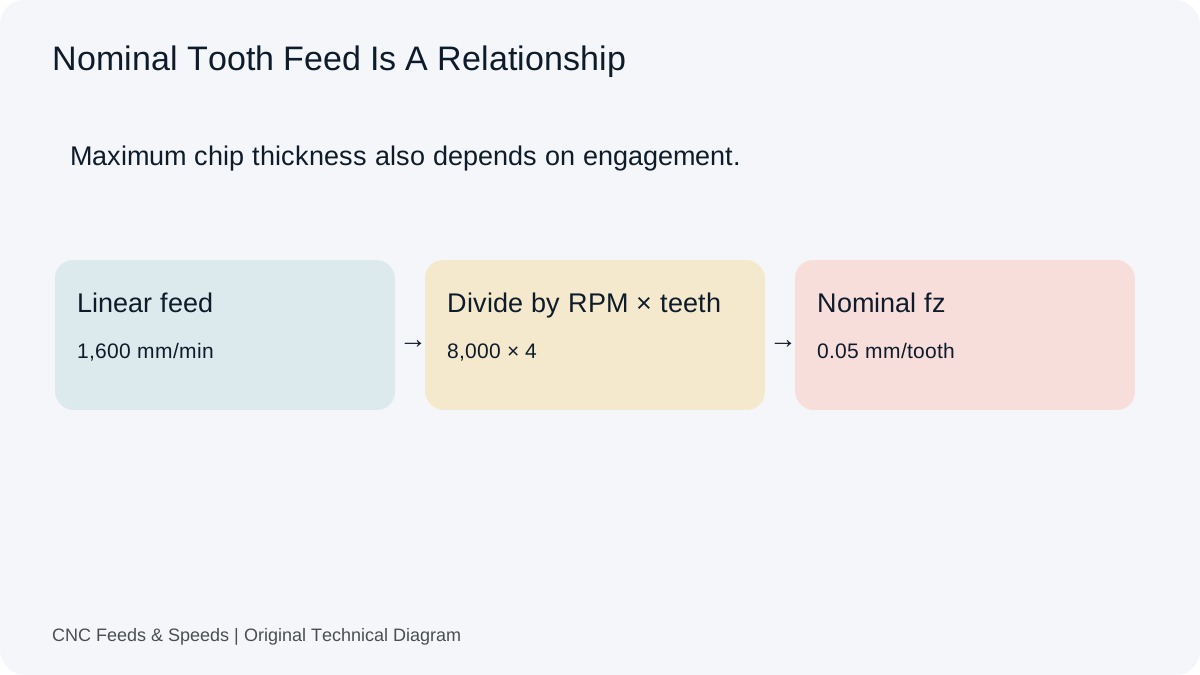
Understand feed per tooth, how chip load is calculated, and how flute count and spindle speed change milling feed.
Read Article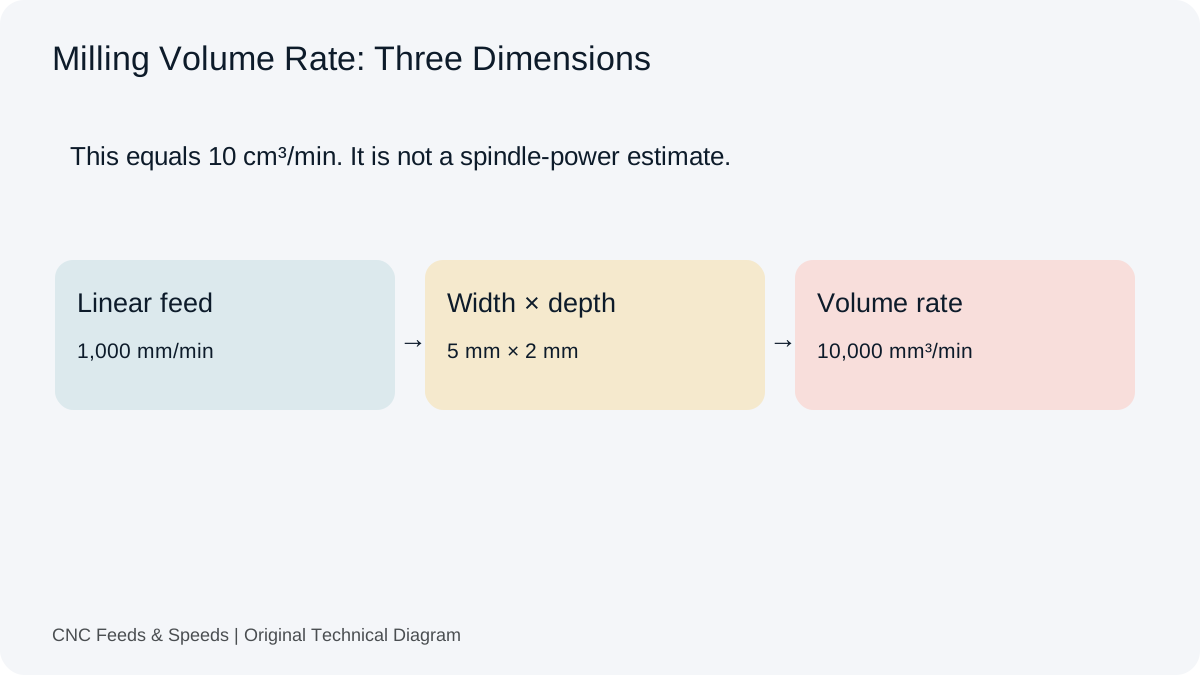
Calculate and interpret material removal rate for CNC milling, including feed, radial engagement and axial depth.
Read Article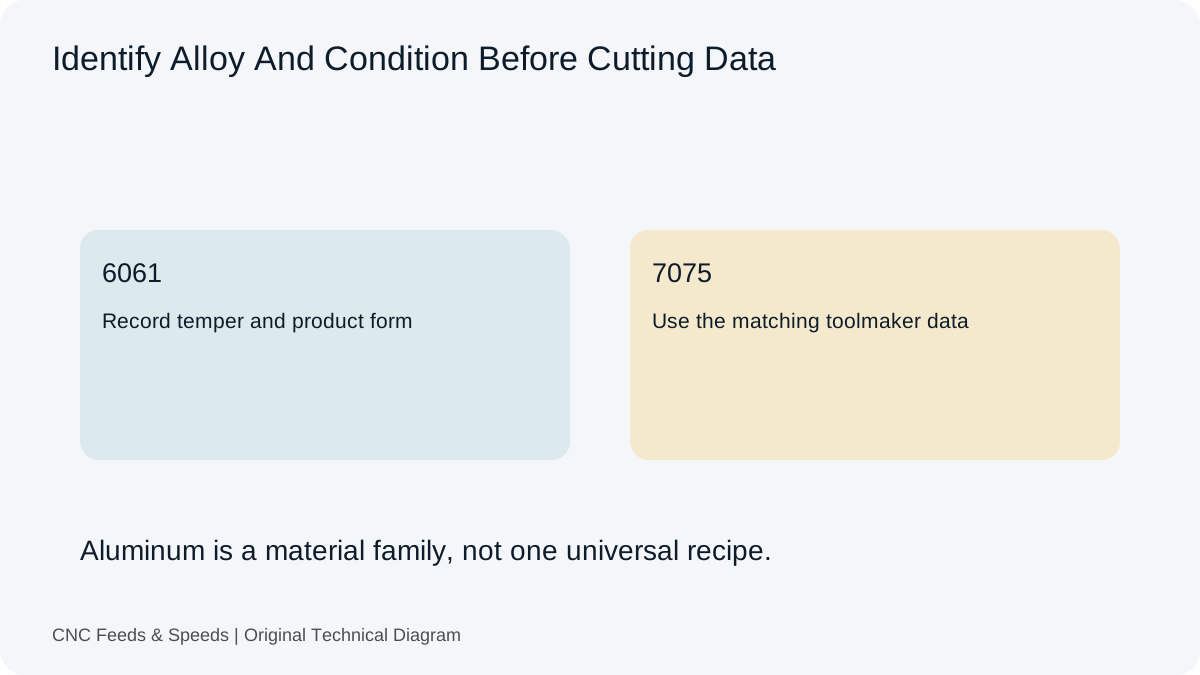
Build an aluminum milling starting point from toolmaker cutting speed and chip load, then verify engagement, chip evacuation and machine limits.
Read Article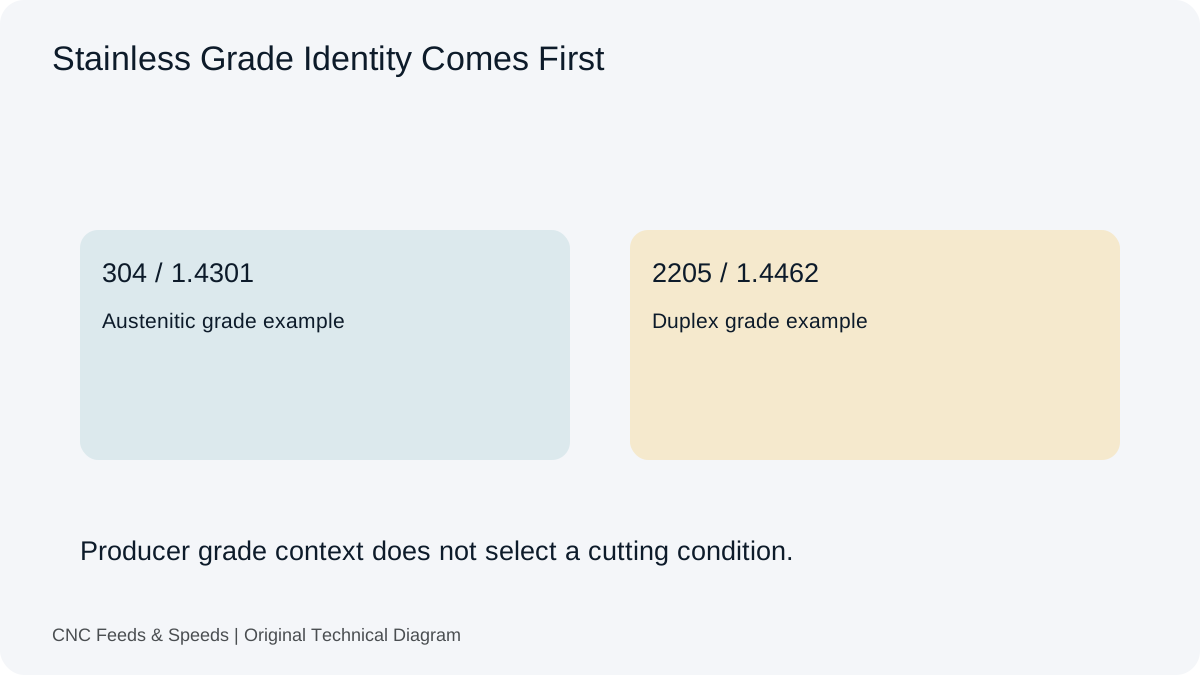
A calculation-first framework for stainless steel machining that emphasizes tool data, chip thickness, rigidity and heat control.
Read Article