
Request A Tool
Describe the calculation your workflow needs, the inputs you already have and the output you want to check. Include units and an example without confidential job details.
Request A ToolFind nominal feed per tooth from a known milling feed and RPM. This is useful when reviewing an existing program or comparing two feed settings on the same cutter.
Find nominal feed per tooth from a known milling feed and RPM. This is useful when reviewing an existing program or comparing two feed settings on the same cutter. Record the effective number of cutting edges with the result. A feed copied from another cutter can produce a different tooth-feed value even at the same spindle setting.
Check programmed feed per minute, actual RPM and effective flute count.
Feed per tooth = feed rate ÷ (RPM × effective flute count).
Enter the values you know. The result is calculated in your browser.
Calculation only. Verify toolmaker data, material grade, engagement, machine limits, workholding and actual cutting conditions before production.
Review the additional variables shown in this tool.
Enter the values you know. The result is calculated in your browser.
Calculation only. Verify toolmaker data, material grade, engagement, machine limits, workholding and actual cutting conditions before production.
Feed per tooth = feed rate ÷ (RPM × effective flute count).
A feed of 1,600 mm/min at 8,000 RPM with four effective flutes gives 0.05 mm/tooth. If the program keeps that feed but halves RPM, nominal chip load doubles to 0.10 mm/tooth.
Engagement and cutter geometry affect the chip formed at the cutting edge. The simple division reports nominal tooth feed. It does not automatically compensate for radial chip thinning or runout.
Use the effective cutting edges relevant to the operation and toolmaker convention. Do not use the number of inserts carried by a tool body if that differs from the effective teeth specified for the cut.
Check the formula reference or report a result that does not match your calculation.
Illustrative arithmetic only. Select cutting inputs from the applicable tool and material reference.
| Step | Substitution | Result |
|---|---|---|
| Feed Per Tooth | 1,600 ÷ (8,000 × 4) | 0.05 mm/tooth |
The division reports feed per tooth from the entered motion. It does not measure maximum chip thickness or how evenly the teeth share load. Use the chip load guide when engagement, effective teeth or runout make those quantities important.
Formula reference: Sandvik Coromant milling formulas and definitions. Use the exact tool supplier for recommended cutting values.
One describes advance attributed to each effective cutting tooth; the other describes advance during a whole spindle revolution. At the same RPM and linear feed, dividing by four teeth gives one quarter of the per-revolution value.
No. Use a toolmaker method for the actual cutter geometry and engagement before changing the source tooth feed. The calculator only divides the entered values.
Describe the calculation your workflow needs, the inputs you already have and the output you want to check. Include units and an example without confidential job details.
Request A ToolShare this page address, the entered values and the result you expected. Include the source of your comparison so the formula, units and explanation can be investigated.
Report An ErrorThe site brings calculation tools and machining references into one workspace. Use the editorial and site information to understand its purpose and limitations. Send corrections with a reproducible example through the error report form.
Continue with the calculation, setup or troubleshooting question closest to your task.
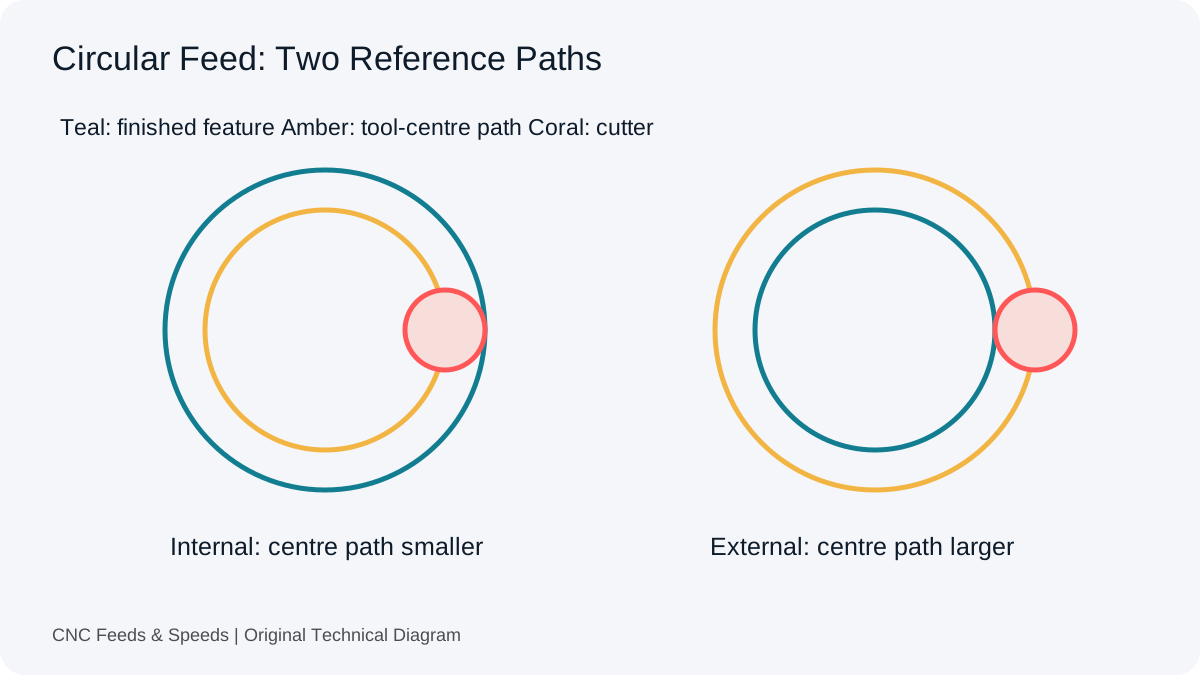
Convert internal and external circular feed with explicit path geometry. Check what CAM already handles before applying another adjustment.
Read Article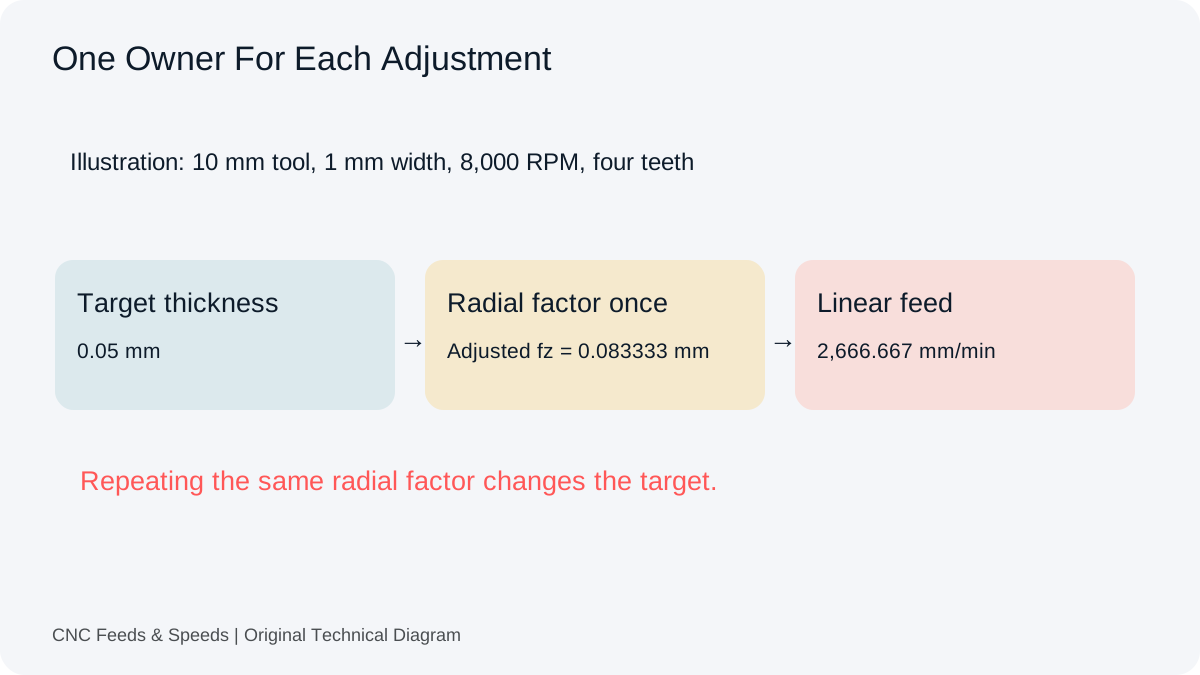
Trace target chip thickness through tooth feed and final command. Identify where compensation occurs before repeating the same adjustment.
Read Article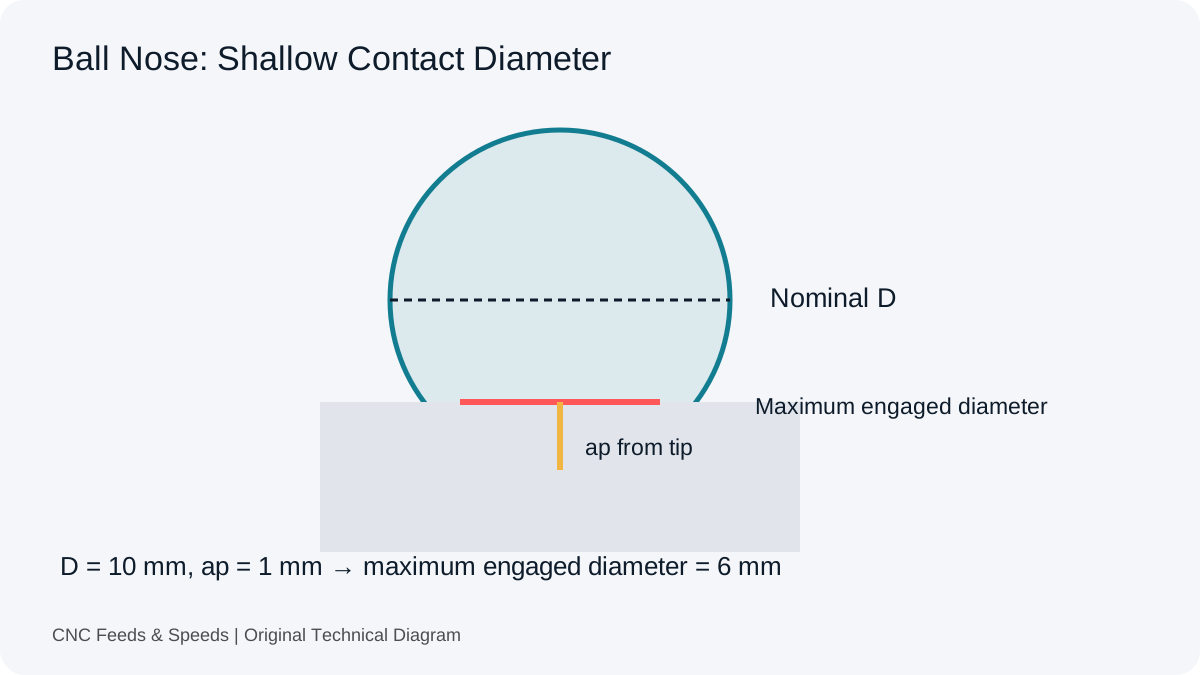
Understand engaged diameter, shallow contact and capped RPM. Keep the untilted model separate from changing three-dimensional surfaces.
Read Article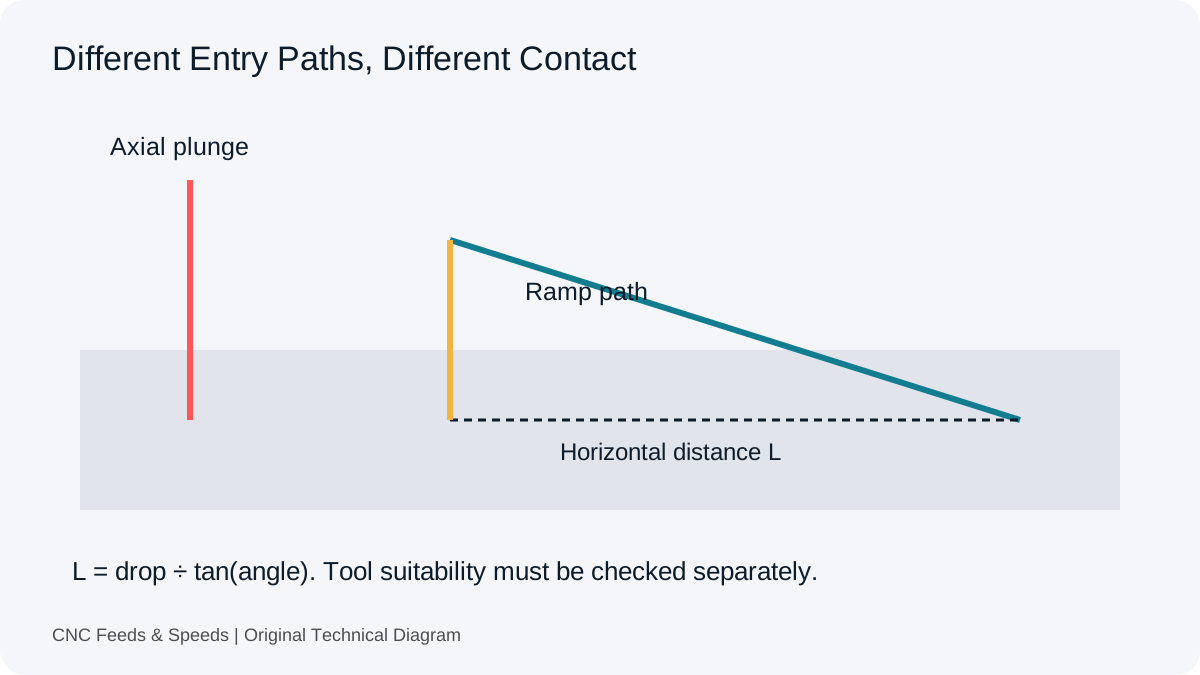
Review entry capability, ramp geometry and chip clearance. Understand why a universal percentage cannot choose a suitable plunge or ramp condition.
Read Article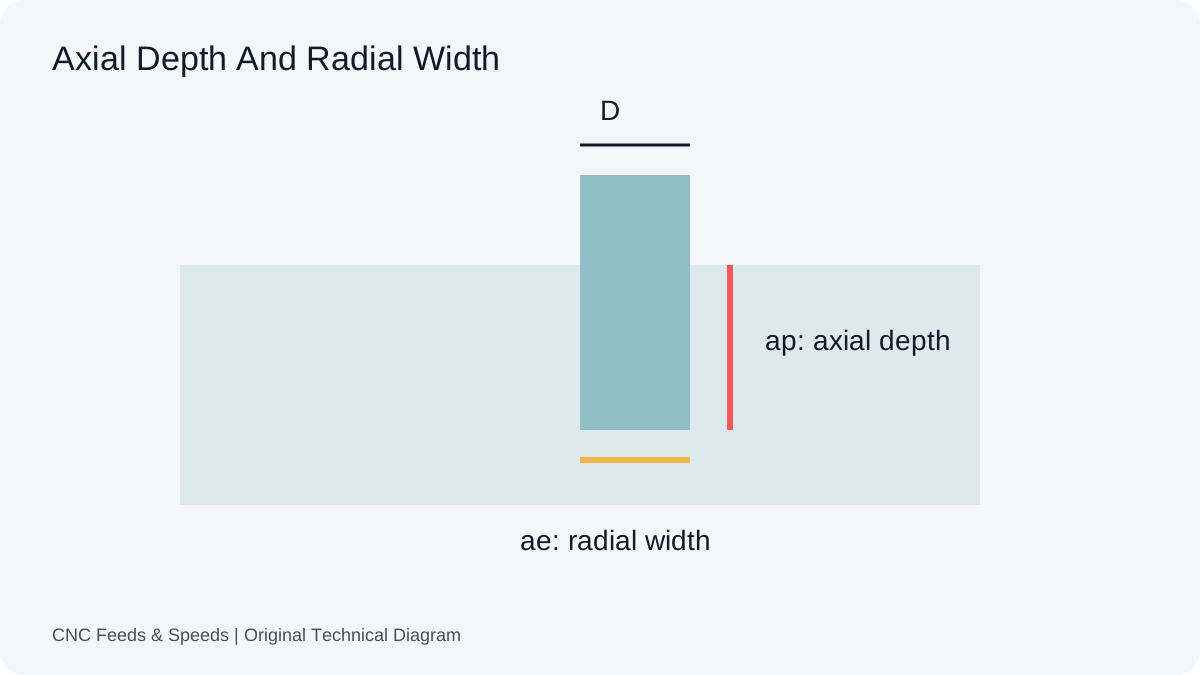
Distinguish tool diameter, axial depth and radial width. Convert engagement percentages and compare removal volume without assuming equal tool load.
Read Article
Understand feed per tooth, how chip load is calculated, and how flute count and spindle speed change milling feed.
Read Article
A practical guide to calculating CNC milling feed rate from spindle speed, flute count and chip load, with unit checks and verification steps.
Read Article
Calculate and interpret material removal rate for CNC milling, including feed, radial engagement and axial depth.
Read Article
A practical method for interpreting CNC cutting-data charts, matching units, and cross-checking chart values with transparent calculations.
Read Article
Learn what surface feet per minute means, how it relates to RPM and diameter, and when to use SFM versus metric cutting speed.
Read Article
Understand how spindle RPM and programmed feed interact, when feed should scale, and why machine limits change the calculation.
Read Article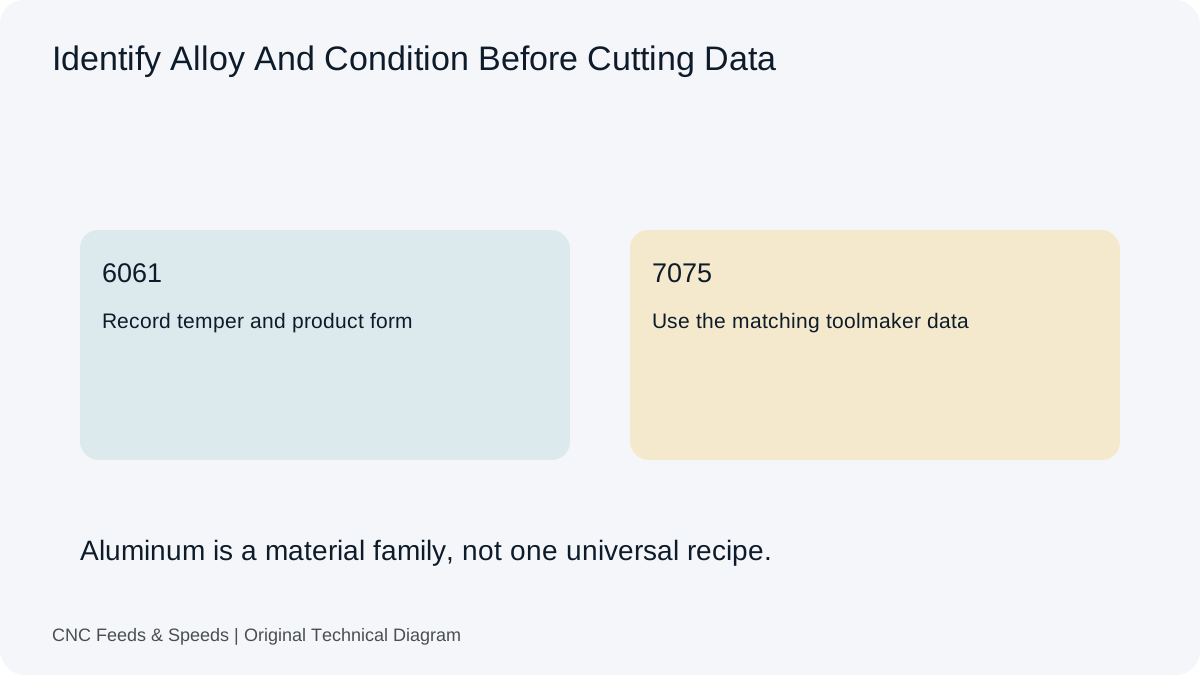
Build an aluminum milling starting point from toolmaker cutting speed and chip load, then verify engagement, chip evacuation and machine limits.
Read Article