
Request A Tool
Describe the calculation your workflow needs, the inputs you already have and the output you want to check. Include units and an example without confidential job details.
Request A ToolRecord the iron type and supplied condition before looking up cutting data. A general cast-iron label can hide important differences between the material assumed by a tooling chart and the component on the machine.
Gray, ductile and other iron types should be identified from the available specification. Do not transfer a reference condition solely because two components are castings. The calculator does not inspect casting skin, local variation or the condition of a particular surface.
For milling, use the cutting diameter required by the source relationship. For turning, use workpiece diameter at the cut. A large cutter at moderate RPM can still have substantial surface speed, so RPM alone is not enough for comparing setups.
An assumed 80 mm diameter at 500 RPM gives approximately 125.7 m/min. This is a geometry calculation. It does not identify an appropriate insert grade, cutting speed or coolant practice for a casting.
Keep tool grade, geometry and the source operation notes with the cutting values. The MRR calculator estimates volume from engagement and feed; it does not predict force or interrupted-cut performance. Use supplier instructions and the actual component conditions when evaluating a first cut.
Open The Feed & Speed Calculator | Browse Material References
Sandvik Coromant distinguishes grey, nodular, malleable, compacted graphite and austempered ductile iron in its cast-iron milling reference. These families should remain separate when reading supplier application information. The name casting identifies a manufacturing route, but it does not establish which iron material is on the machine.
| Example Family | Information To Keep |
|---|---|
| Grey iron | The actual grade, supplied condition and tool supplier’s matching material entry. |
| Nodular or ductile iron | Its own specification and condition rather than a grey-iron substitute. |
| Compacted graphite iron (CGI) | The component designation and tooling guidance that explicitly covers it. |
Identify the iron family on each job, then compare the cutter grade and operation conditions before comparing feed values. Sandvik’s cast-iron milling insert and grade reference explains its application categories. Use the milling MRR calculator to compare volume at known engagement; it cannot select an insert grade or predict interrupted-cut behaviour.
Supplier product guidance describes its own application choices. Match the actual iron specification and current tooling documentation before transferring a condition.
No. It only processes entered numbers. Establish the iron type and relevant component conditions from the specification and tooling guidance.
No. The MRR calculation estimates volume. Insert grade, geometry and application suitability require the relevant tool data.
Describe the calculation your workflow needs, the inputs you already have and the output you want to check. Include units and an example without confidential job details.
Request A ToolShare this page address, the entered values and the result you expected. Include the source of your comparison so the formula, units and explanation can be investigated.
Report An ErrorThe site brings calculation tools and machining references into one workspace. Use the editorial and site information to understand its purpose and limitations. Send corrections with a reproducible example through the error report form.
Continue with the calculation, setup or troubleshooting question closest to your task.
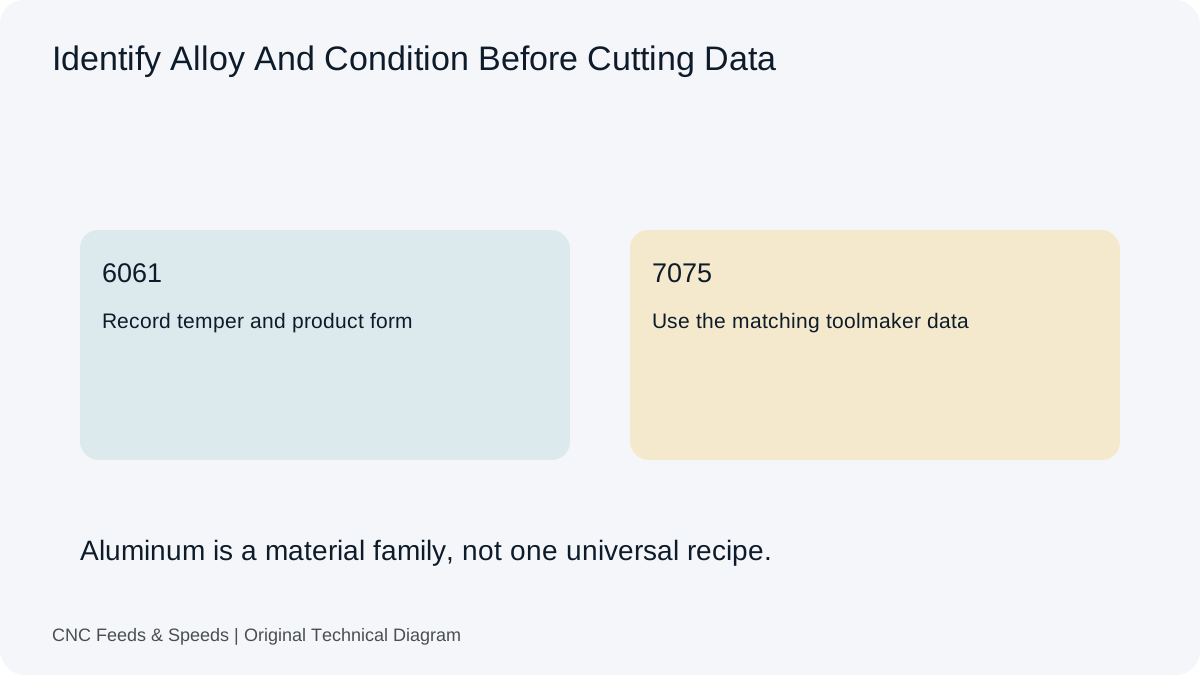
Build an aluminum milling starting point from toolmaker cutting speed and chip load, then verify engagement, chip evacuation and machine limits.
Read Article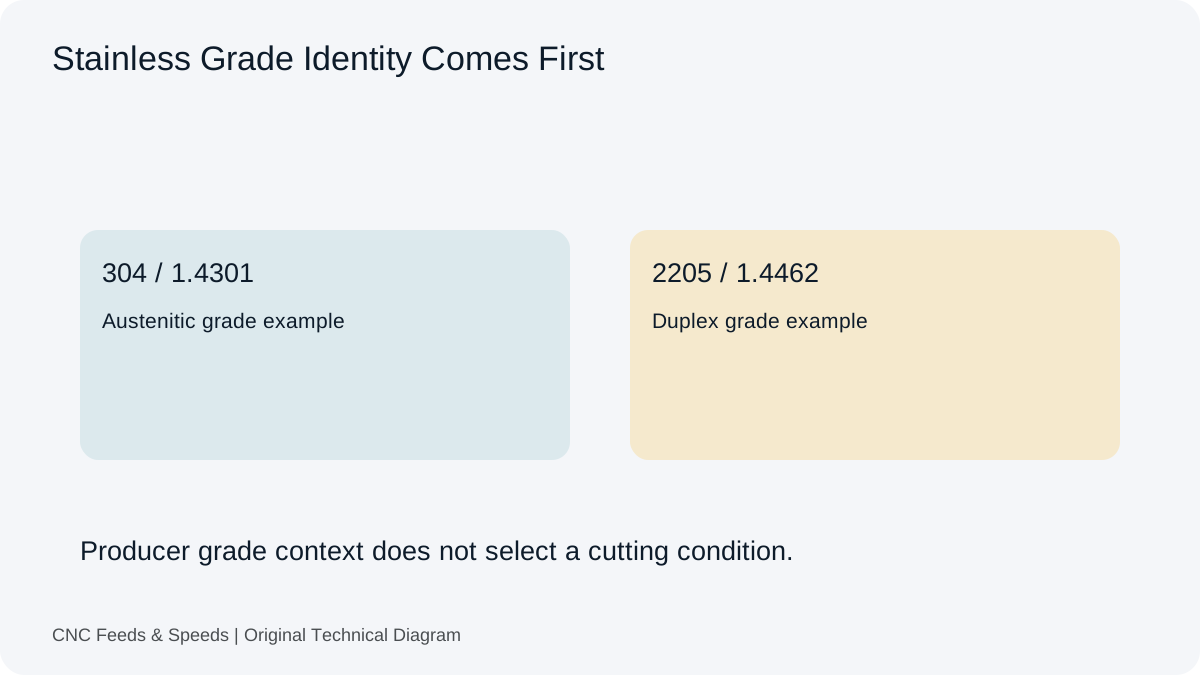
A calculation-first framework for stainless steel machining that emphasizes tool data, chip thickness, rigidity and heat control.
Read Article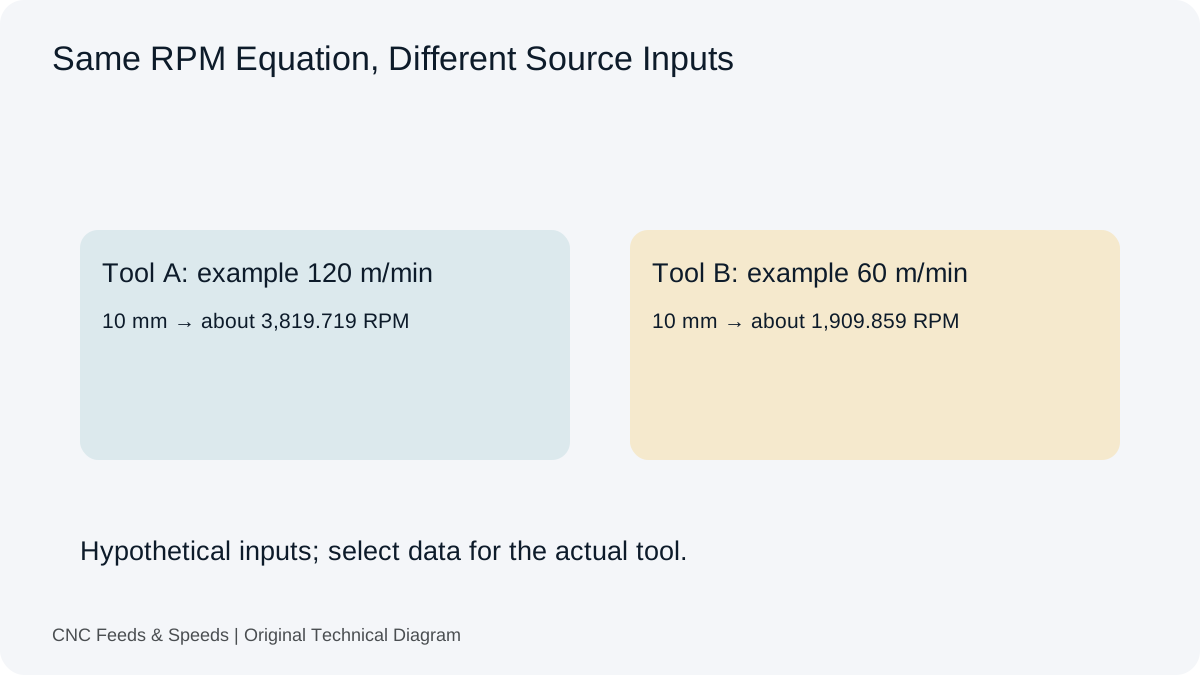
Compare carbide and HSS cutting-data considerations and learn how tool construction changes the starting cutting condition.
Read Article
A practical method for interpreting CNC cutting-data charts, matching units, and cross-checking chart values with transparent calculations.
Read Article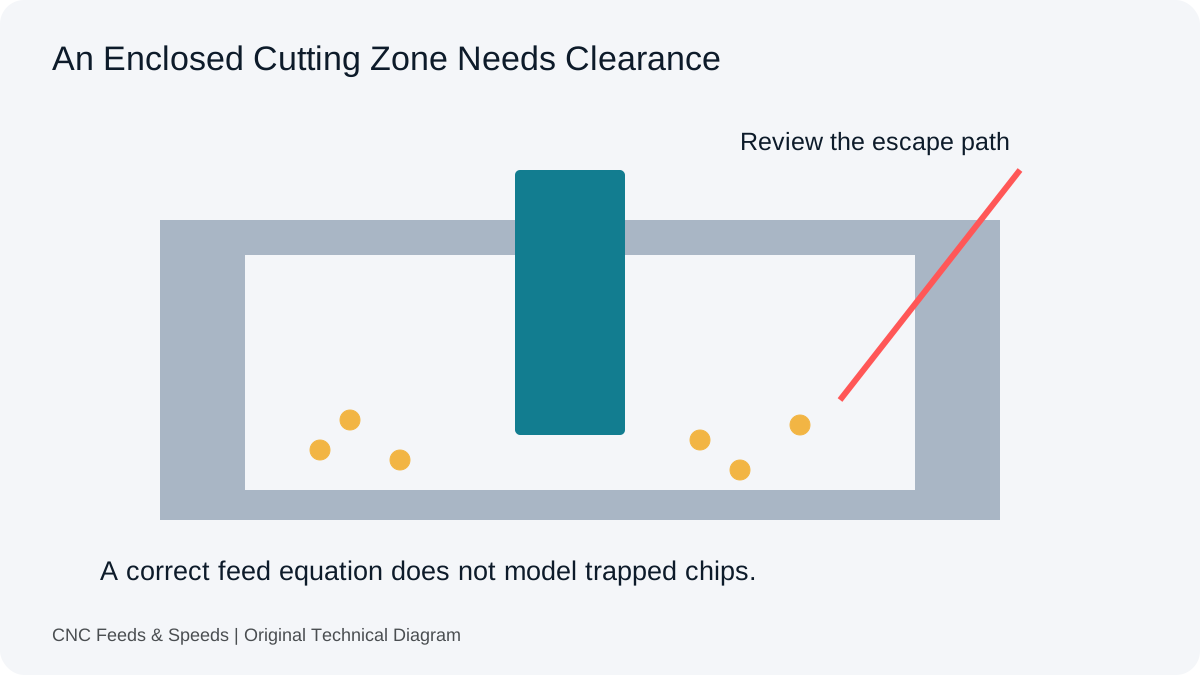
Distinguish arithmetic errors from an enclosed cutting zone. Review entry, tooling, material and chip clearance before another feed change.
Read Article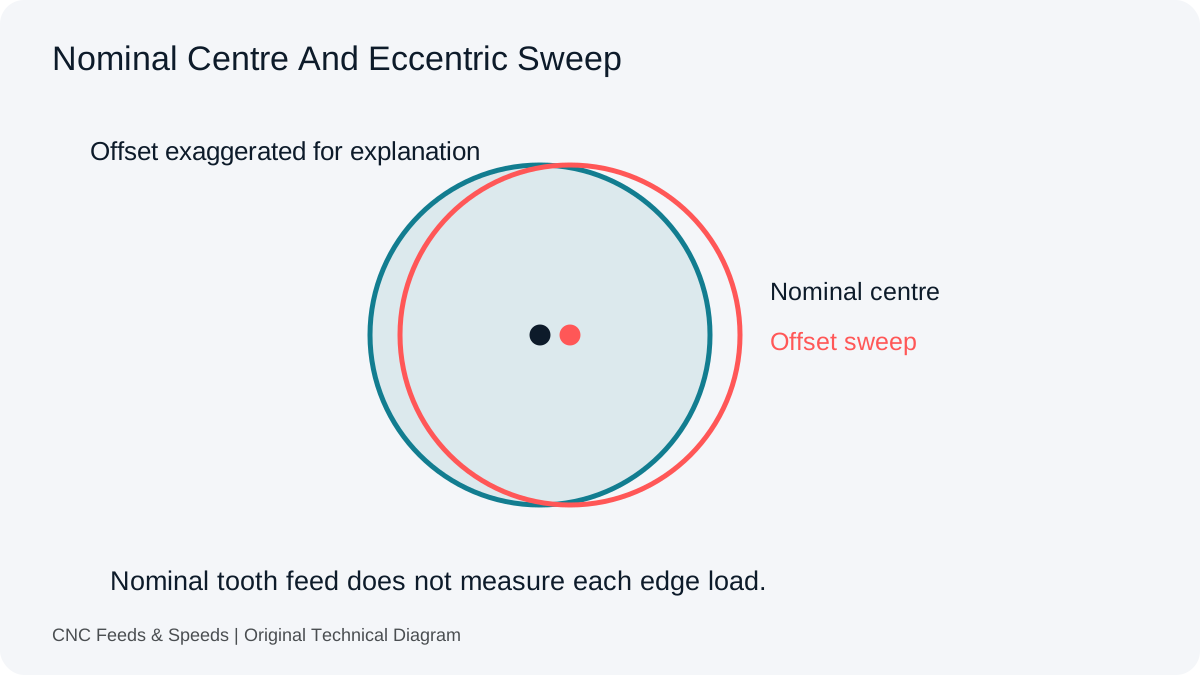
Inspect the difference between nominal tooth feed and actual edge loading. Record the assembly and measurement before changing assumptions.
Read Article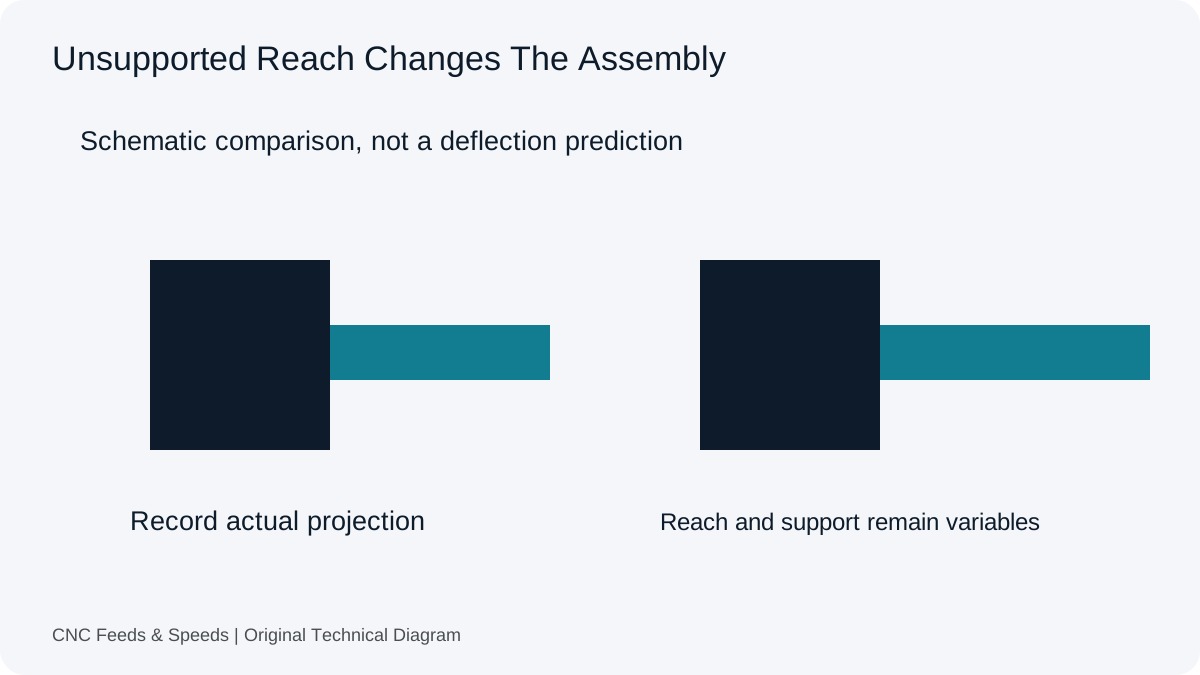
Understand why tool stick-out and system rigidity affect usable CNC cutting conditions, and how to troubleshoot chatter systematically.
Read Article
A practical guide to calculating CNC milling feed rate from spindle speed, flute count and chip load, with unit checks and verification steps.
Read Article
Understand feed per tooth, how chip load is calculated, and how flute count and spindle speed change milling feed.
Read Article
Learn what surface feet per minute means, how it relates to RPM and diameter, and when to use SFM versus metric cutting speed.
Read Article
Understand how spindle RPM and programmed feed interact, when feed should scale, and why machine limits change the calculation.
Read Article
Calculate and interpret material removal rate for CNC milling, including feed, radial engagement and axial depth.
Read Article