
Request A Tool
Describe the calculation your workflow needs, the inputs you already have and the output you want to check. Include units and an example without confidential job details.
Request A ToolBrass and bronze should not share a single default feed and speed simply because both are copper alloys. Start with the specified alloy and the tool supplier entry for the actual operation.
A free-machining brass reference is not automatically a reference for a bronze component. Record the designation available from the job or stock documentation. If the tooling source divides the family into subgroups, retain that distinction when recording the cutting data.
A drill chart may state feed per revolution; an end-mill chart may state feed per tooth. Preserve the unit and the tool identification. Multiplying a drill feed-per-revolution value by flute count would introduce a new value that the source did not specify.
At 2,000 RPM, a chosen 0.10 mm/rev corresponds to 200 mm/min. A milling tooth feed of 0.10 mm/tooth with two effective flutes at the same RPM corresponds to 400 mm/min. The example compares units only; it does not recommend either condition for brass or bronze.
Keep the alloy, operation and relevant edge geometry with the calculated values. When the stock or tool changes, revisit the source data. The calculator has no field that can infer the actual alloy or automatically identify whether a cutter is appropriate.
Open The Feed & Speed Calculator | Browse Material References
Two useful identification examples are C36000 brass and C93200 bronze. Wieland and Aviva Metals publish supplier information for these alloy examples. Keep the specified alloy with the job record instead of treating a common copper-alloy colour or a general brass/bronze label as sufficient identification.
| Example | Reference And Scope |
|---|---|
| C36000 | Wieland brass-alloy designations (supplier designation cross-reference). |
| C93200 | Aviva Metals C93200 bearing-bronze reference (bearing-alloy selection context). |
For a component already specified in a bronze alloy, keep that designation and the relevant material documentation with the insert reference. Use the turning workspace for workpiece-diameter and feed-per-revolution calculations. The bearing-material reference does not select a cutting speed for an unspecified insert or establish that the material meets the component’s service requirements.
The examples explain material identification, not material substitution. Use the job specification and applicable supplier documentation for the actual component.
Do not assume so. Identify the specified alloy and the tool supplier category for the actual operation.
A value per tooth and the same value per revolution have different meanings. Milling tooth feed includes effective teeth; the per-revolution relationship does not add that multiplier.
Describe the calculation your workflow needs, the inputs you already have and the output you want to check. Include units and an example without confidential job details.
Request A ToolShare this page address, the entered values and the result you expected. Include the source of your comparison so the formula, units and explanation can be investigated.
Report An ErrorThe site brings calculation tools and machining references into one workspace. Use the editorial and site information to understand its purpose and limitations. Send corrections with a reproducible example through the error report form.
Continue with the calculation, setup or troubleshooting question closest to your task.
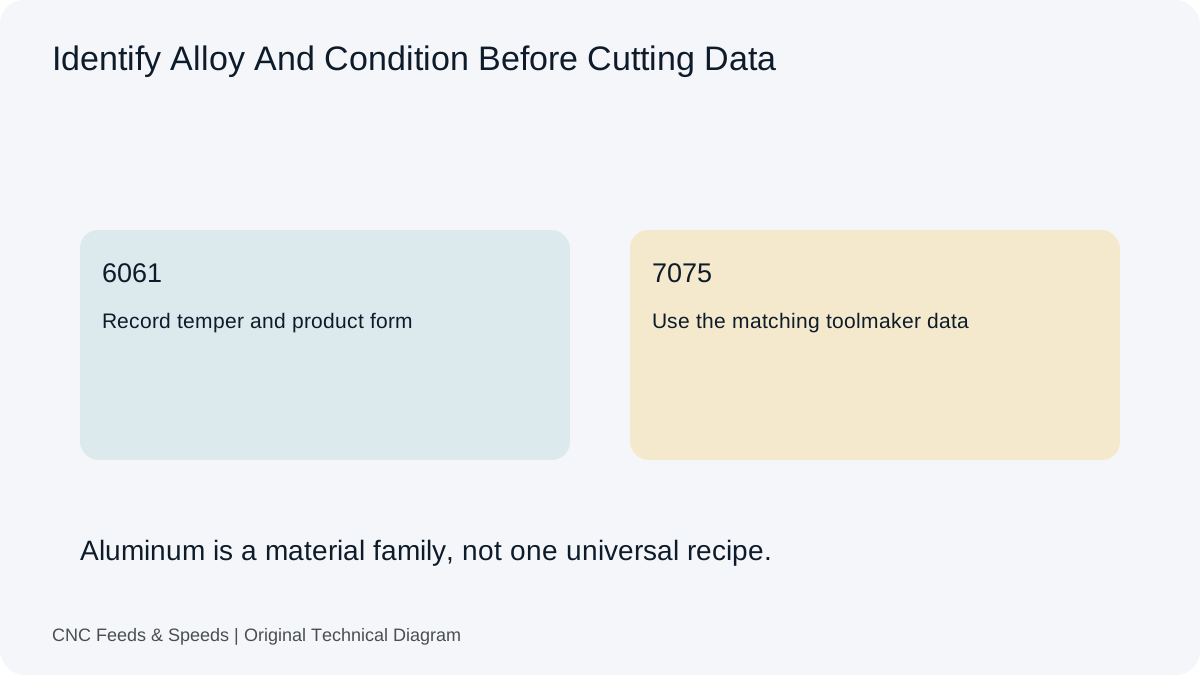
Build an aluminum milling starting point from toolmaker cutting speed and chip load, then verify engagement, chip evacuation and machine limits.
Read Article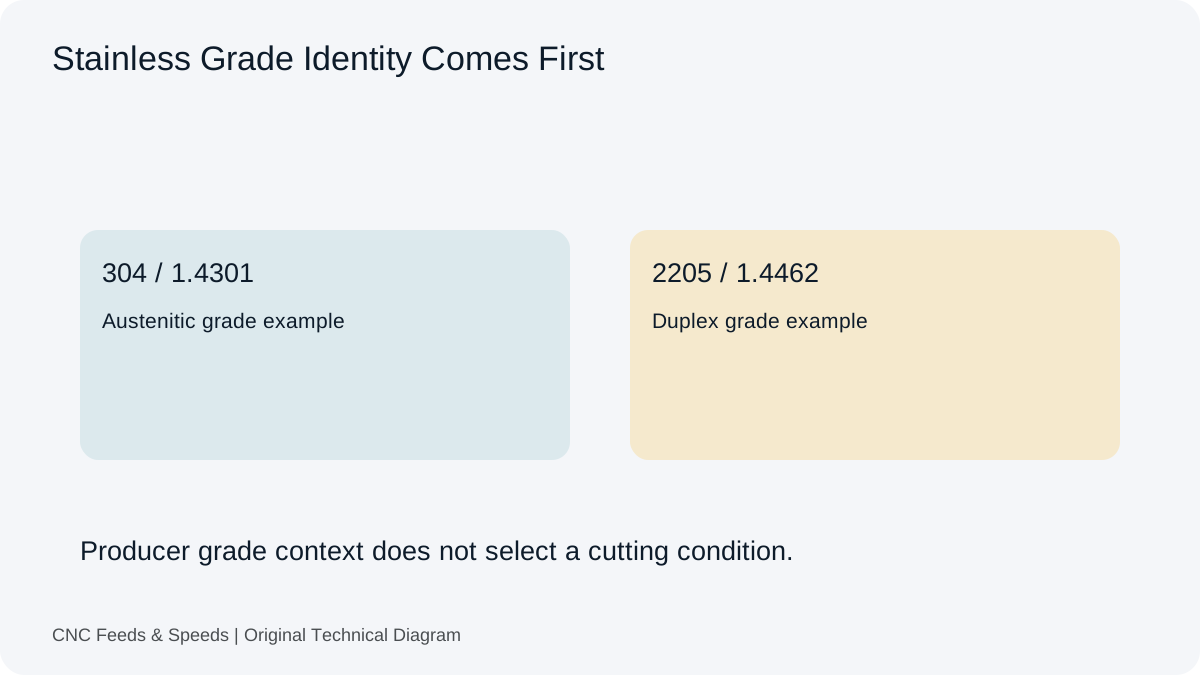
A calculation-first framework for stainless steel machining that emphasizes tool data, chip thickness, rigidity and heat control.
Read Article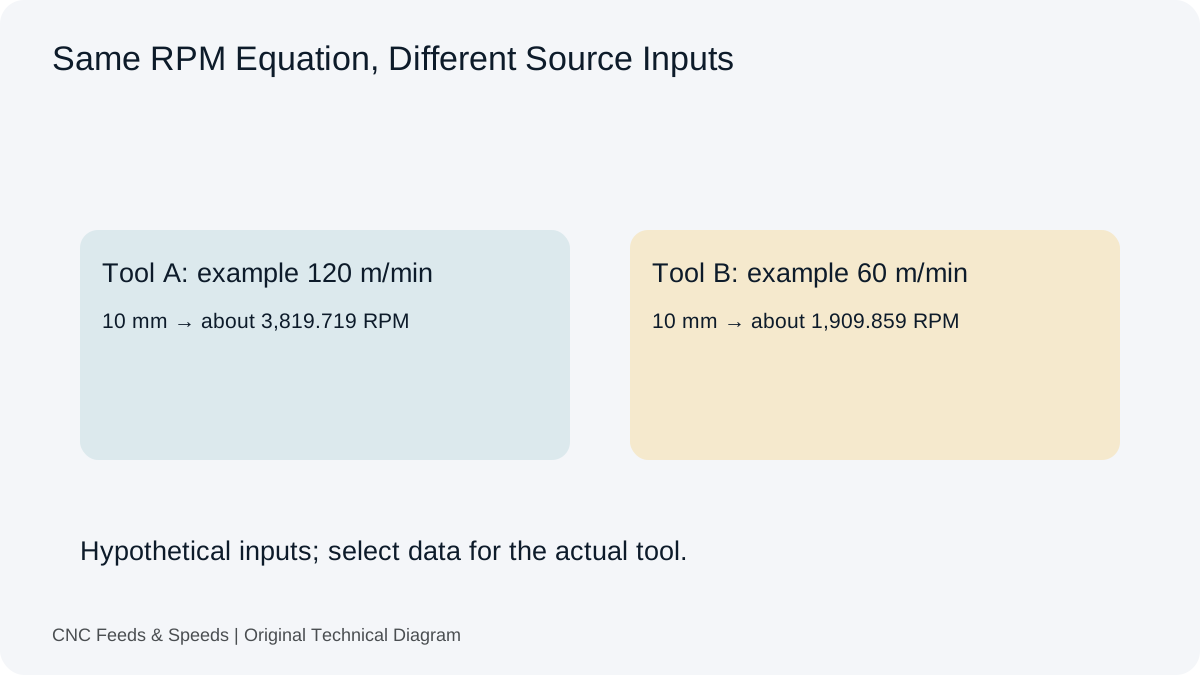
Compare carbide and HSS cutting-data considerations and learn how tool construction changes the starting cutting condition.
Read Article
A practical method for interpreting CNC cutting-data charts, matching units, and cross-checking chart values with transparent calculations.
Read Article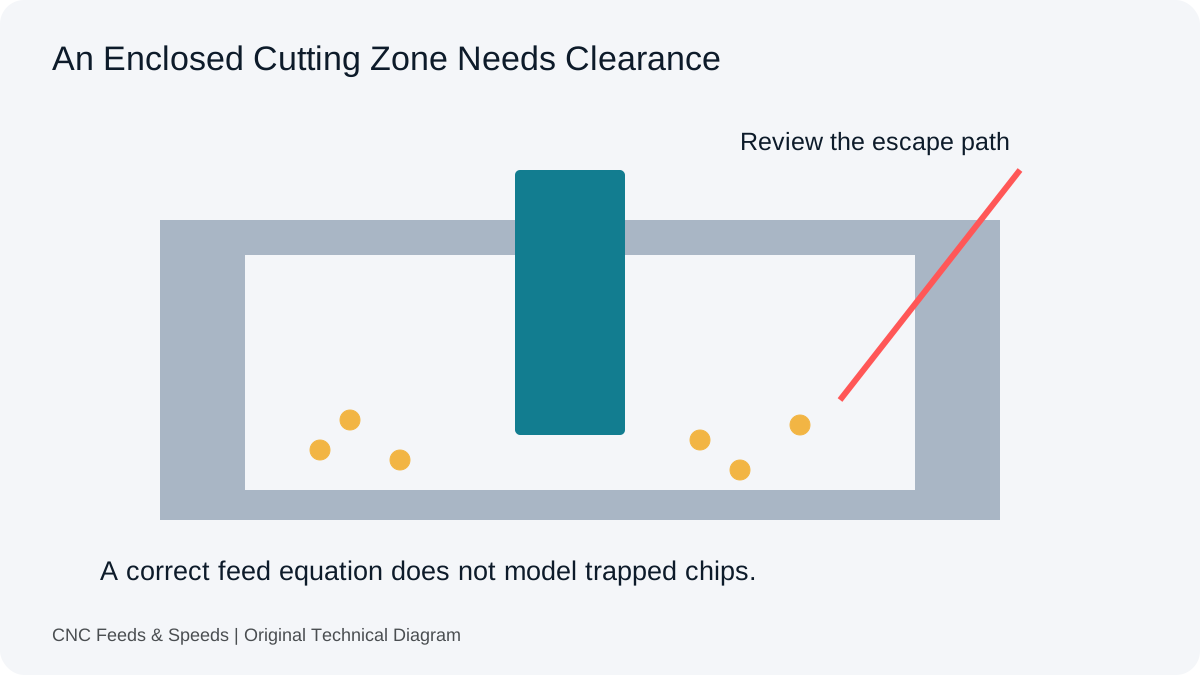
Distinguish arithmetic errors from an enclosed cutting zone. Review entry, tooling, material and chip clearance before another feed change.
Read Article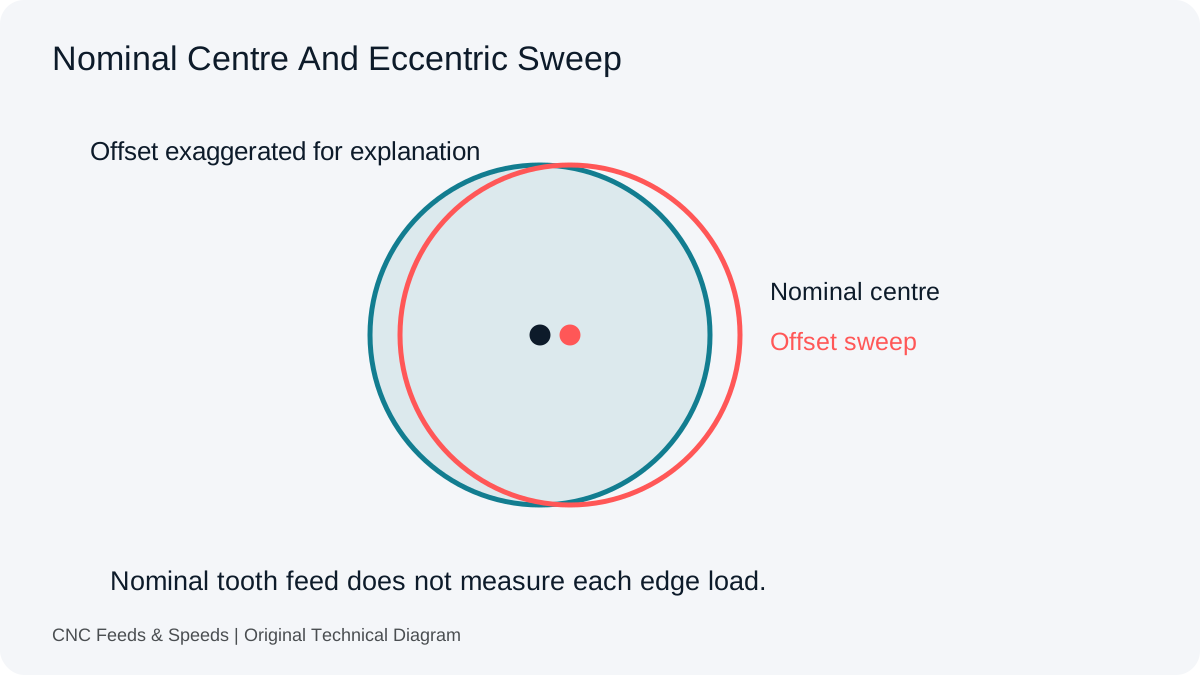
Inspect the difference between nominal tooth feed and actual edge loading. Record the assembly and measurement before changing assumptions.
Read Article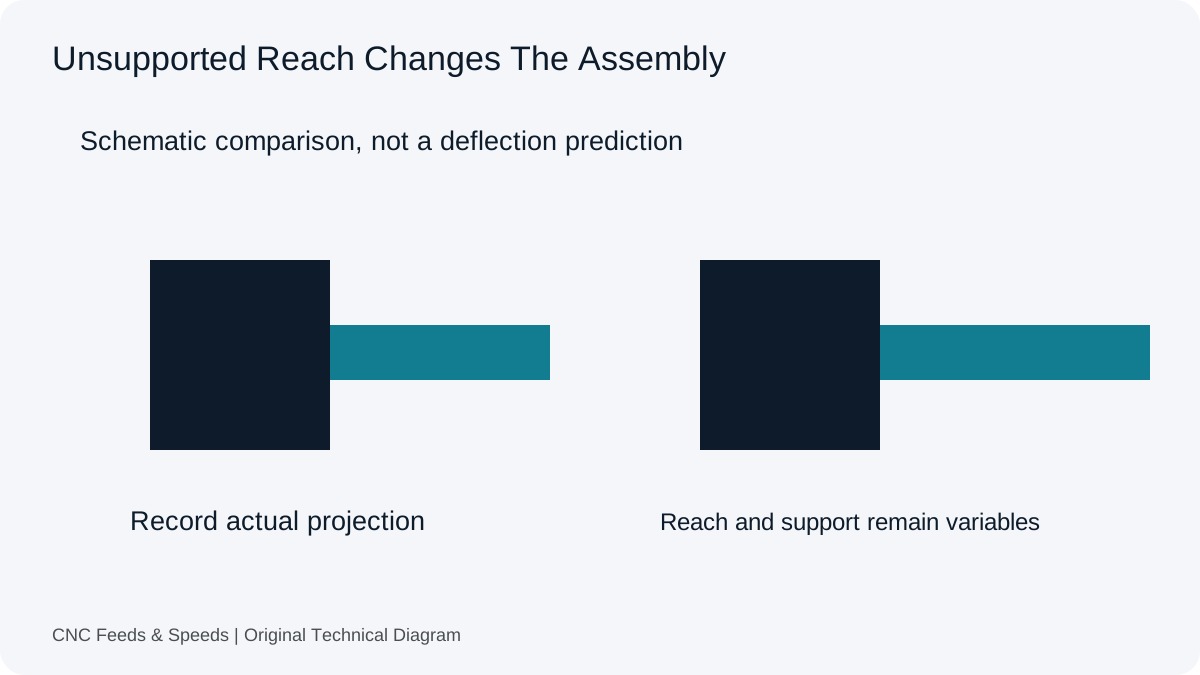
Understand why tool stick-out and system rigidity affect usable CNC cutting conditions, and how to troubleshoot chatter systematically.
Read Article
A practical guide to calculating CNC milling feed rate from spindle speed, flute count and chip load, with unit checks and verification steps.
Read Article
Understand feed per tooth, how chip load is calculated, and how flute count and spindle speed change milling feed.
Read Article
Learn what surface feet per minute means, how it relates to RPM and diameter, and when to use SFM versus metric cutting speed.
Read Article
Understand how spindle RPM and programmed feed interact, when feed should scale, and why machine limits change the calculation.
Read Article
Calculate and interpret material removal rate for CNC milling, including feed, radial engagement and axial depth.
Read Article