Check reamer RPM and feed conventions while keeping prepared-hole and alignment requirements visible.
Reamer RPM From Source Cutting Speed
Use the reamer cutting diameter and supplier speed to calculate RPM. Then inspect the feed per revolution implied by an entered linear feed and actual RPM. Hole preparation, alignment and the intended finished size remain separate process checks.
Used For
Audit reamer speed and feed for an identified tool and prepared hole.
Formula
RPM = 1000 × Vc ÷ (π × reamer diameter). Linear feed = actual RPM × feed per revolution.
Spindle Speed Basic
Enter the values you know. The result is calculated in your browser.
Calculation only. Verify toolmaker data, material grade, engagement, machine limits, workholding and actual cutting conditions before production.
Reaming Feed Per Revolution Check
Use the fuller calculation when additional process and machine variables matter.
Feed Per Rev Advanced
Enter the values you know. The result is calculated in your browser.
Calculation only. Verify toolmaker data, material grade, engagement, machine limits, workholding and actual cutting conditions before production.
Reaming Quick Tools
Calculate a forward feed command from the selected feed per revolution, then estimate steady travel time if needed. Keep the prepared-hole requirements with the job record. These tools do not select a reaming allowance or predict the finished hole size.
Calculate Reamer Linear Feed
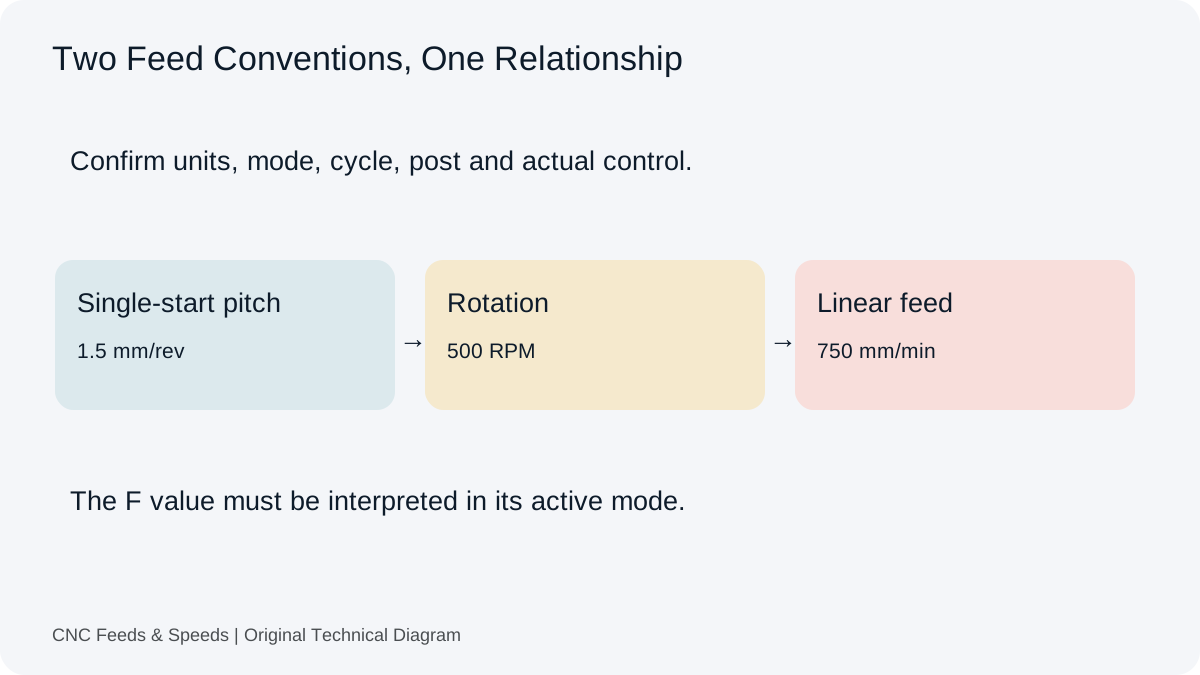
Use actual spindle RPM and the supplier feed per revolution for the reamer. The result is linear feed per minute without an extra tooth multiplier. Recalculate when the actual spindle setting changes.
Open Reamer Feed Tool
Linear feed = actual RPM × feed per revolution. Example: 500 × 0.20 mm/rev = 100 mm/min.
Reamer Linear Feed
Enter the values you know. The result is calculated in your browser.
Calculation only. Verify toolmaker data, material grade, engagement, machine limits, workholding and actual cutting conditions before production.
Estimate feed travel time from the defined distance and linear feed. Include only the distance covered at that constant feed in this calculation. Approach, withdrawal, alignment checks and other cycle events need separate time allowances.
Open Reaming Travel Time
Time = travel ÷ linear feed. Example: 25 mm ÷ 100 mm/min = 0.25 minute (15 seconds), before other cycle events.
Reamer Feed Travel Time
Enter the values you know. The result is calculated in your browser.
Calculation only. Verify toolmaker data, material grade, engagement, machine limits, workholding and actual cutting conditions before production.
Recover surface speed from reamer diameter and the RPM actually selected. Use it to compare a limited spindle setting with the source speed. Keep hole preparation and alignment separate because they are not inputs to this geometry calculation.
Open Reamer Surface Speed
Metric Vc = π × diameter × RPM ÷ 1000. Example: 10 mm at 500 RPM gives 15.71 m/min.
Reamer Surface Speed Check
Enter the values you know. The result is calculated in your browser.
Calculation only. Verify toolmaker data, material grade, engagement, machine limits, workholding and actual cutting conditions before production.
A reamer speed and feed calculation needs data for the actual tool construction and workpiece material. Use reamer cutting diameter in the speed equation, then keep the supplier feed convention visible. Copying a drilling feed solely because the tools enter the same hole does not establish an appropriate reaming condition.
From Reamer Speed To A Feed Check
Select the unit system and enter supplier cutting speed with reamer cutting diameter.
Calculate RPM, then identify the actual setting after machine limits.
Use the Reamer Linear Feed quick tool to multiply actual RPM by source feed per revolution.
Enter that feed and actual RPM in the second panel to verify the per-revolution value. Use its other fields only as comparison inputs.
Reaming Example With Explicit Units
Assume 20 m/min and a 10 mm reamer for an arithmetic example. RPM = 1000 × 20 ÷ (π × 10) = 636.62. At an independently selected 0.20 mm/rev, linear feed is 636.62 × 0.20 = 127.32 mm/min. Dividing that feed by the same RPM returns approximately 0.20 mm/rev. Neither assumed input is a recommendation for an unspecified reamer or material.
Prepared Hole And Alignment
The calculation has no field for stock allowance, hole straightness, alignment or runout. Those conditions can affect the finished hole even when RPM and feed are arithmetically correct. Follow the reamer supplier instructions for the prepared hole and toolholding arrangement, then retain the initial hole information with the final measurements. For a tool-specific reference, Sandvik Coromant's CoroReamer 835 overview distinguishes material applications, flute designs, coolant and toolholding. That product information does not validate the illustrative cutting inputs on this page.
Changing RPM Without Losing The Feed Convention
If the intended feed per revolution is retained after an RPM change, linear feed must change with it. At 500 RPM and 0.20 mm/rev, for example, the matching feed is 100 mm/min. The feed per revolution tool can inspect a saved program value, while the chart guide helps distinguish source units and tool-specific conditions.
Reaming Questions
Does This Page Choose A Reaming Allowance?
No. The formula only relates speed, diameter and feed. Obtain allowance and hole-preparation guidance for the actual reamer and application.
Is A Correct RPM Enough To Predict Hole Size?
No. Alignment, runout, tool condition and prepared-hole geometry remain outside the calculation. Compare the finished result with the job specification.
Why Use A Reaming Page Instead Of A Generic Milling Calculator?
It keeps reamer diameter, source feed per revolution and hole preparation in the same workflow. Milling feed per tooth follows a different input convention.
Help Improve This Resource
Request A Tool
Describe the calculation your workflow needs, the inputs you already have and the output you want to check. Include units and an example without confidential job details.
Share this page address, the entered values and the result you expected. Include the source of your comparison so the formula, units and explanation can be investigated.
The site brings calculation tools and machining references into one workspace. Use the editorial and site information to understand its purpose and limitations. Send corrections with a reproducible example through the error report form.
Related Articles
Continue with the calculation, setup or troubleshooting question closest to your task.
When A Router Cannot Run Slowly Enough To Drill
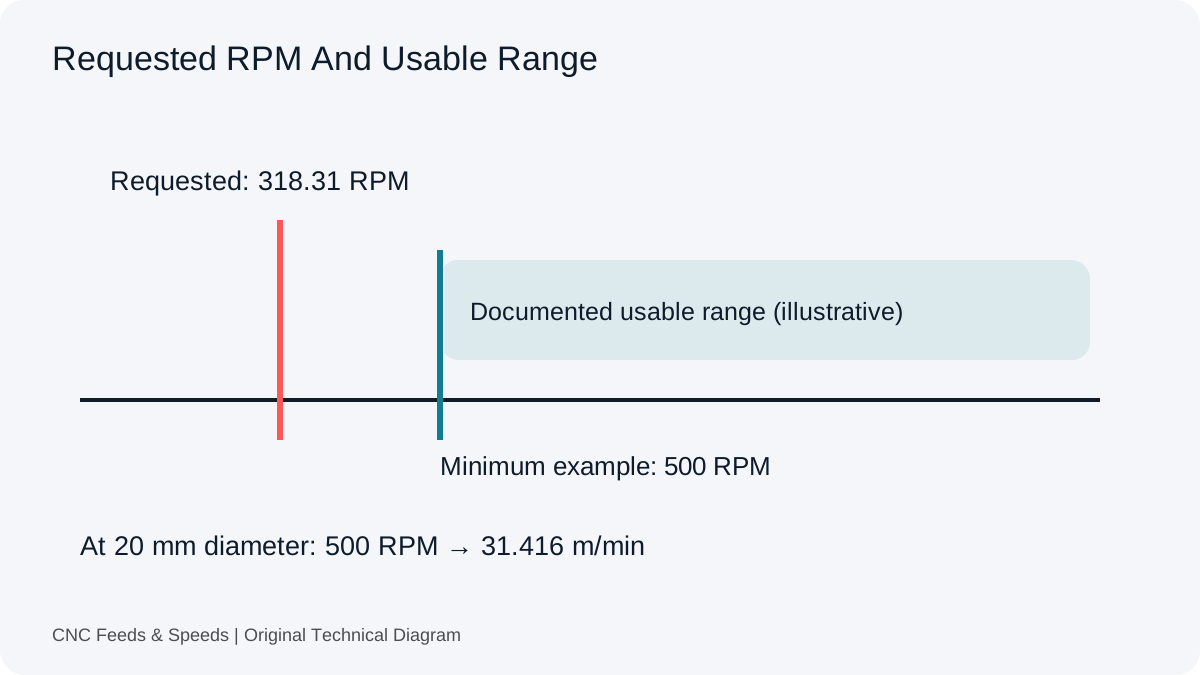
Compare drill requirements with the usable spindle range. Calculate achieved cutting speed without treating feed adjustment as a cure for incompatible tooling.